 by
by The long-standing conflict between Israel and Gaza has once again taken a dramatic turn with the interception of the final boat in a Gaza-bound flotilla carrying humanitarian aid. The Israeli navy blocked the vessel, detaining around 450 activists on board. This latest incident has sparked widespread debate across international communities, reigniting discussions about humanitarian access, the blockade on Gaza, and the larger political conflict that continues to destabilize the region.
The Incident: Intercepting the Final Aid Boat
According to reports, the flotilla of aid boats had been organized by international activists and humanitarian groups, aiming to deliver much-needed supplies to the people of Gaza. Over the years, flotilla missions have become symbolic acts of resistance against the blockade imposed by Israel.
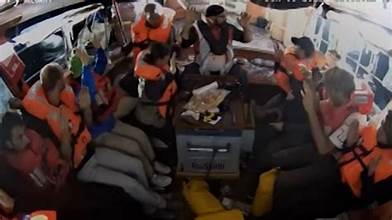
The interception of the final boat marks the end of a tense standoff at sea. Israeli forces reportedly surrounded the vessel and ordered it to change course toward an Israeli port. When the crew and activists refused, the navy boarded the ship. Around 450 activists, representing various nationalities and organizations, were detained and taken to Israeli custody for questioning.
While no violent clashes were reported in this particular interception, the move has drawn strong criticism from activists, human rights groups, and some foreign governments who argue that Israel is denying Gaza’s civilian population essential humanitarian aid.
Israel’s Justification
From Israel’s perspective, the blockade is a necessary security measure. Officials argue that allowing unchecked access to Gaza via sea could enable the smuggling of weapons and materials that could be used by militant groups such as Hamas. Israel insists that all humanitarian goods can enter Gaza through designated land crossings, where shipments can be inspected for prohibited items.
The Israeli government maintains that the flotilla was a provocation rather than a purely humanitarian effort. In their view, such missions bypass established procedures and attempt to delegitimize Israel’s right to safeguard its borders.
Activists’ Perspective
On the other hand, activists and humanitarian organizations see the flotilla as an urgent response to the dire humanitarian crisis in Gaza. They argue that Gaza’s population of over 2 million faces severe shortages of food, medicine, fuel, and construction materials due to the blockade. By intercepting the flotilla, critics say Israel is effectively punishing civilians who are already living under challenging conditions.
For the activists detained, the mission was not only about delivering aid but also about drawing international attention to what they describe as collective punishment of Gaza’s population. Several activists released statements before their detention, emphasizing that their actions were non-violent and rooted in principles of human rights and international law.
International Reactions
The incident has triggered a wave of international reactions. Some governments expressed concern over the detention of their citizens, demanding their safe release. Human rights organizations, including Amnesty International and Human Rights Watch, reiterated their calls for an end to the blockade, describing it as disproportionate and harmful to civilians.
Meanwhile, Israel’s allies, including the United States, largely defended the country’s right to enforce security measures, though some officials urged restraint and dialogue. The European Union expressed regret over the incident and called for both sides to work toward easing humanitarian conditions in Gaza.
The divergence in international responses highlights the complexities of the issue. For some, Israel’s blockade is viewed as a defensive necessity; for others, it is an unjust collective punishment that worsens the humanitarian crisis.
450 Activists Detained as Israel Blocks Final Gaza Aid Boat
The Blockade and Its Consequences
The Gaza blockade, jointly enforced by Israel and Egypt, has been in place since 2007, following Hamas’s takeover of the territory. While Israel allows certain categories of goods to pass through land crossings, restrictions on building materials, fuel, and other essentials have created an economy marked by dependency, unemployment, and humanitarian crises.
The United Nations has repeatedly described Gaza as being on the brink of collapse, citing deteriorating living conditions, limited access to clean water, electricity shortages, and strained medical services. For Gaza’s residents, aid flotillas represent more than supplies—they symbolize solidarity from the outside world.
Symbolism of the Flotilla Movement
The flotilla movement is not new. One of the most infamous incidents occurred in 2010 when Israeli commandos stormed the Mavi Marmara, a Turkish ship, resulting in the deaths of nine activists. That event drew international condemnation and strained relations between Israel and Turkey for years.
Since then, flotilla missions have been organized sporadically, though most have been intercepted without bloodshed. Each attempt adds to the ongoing narrative of confrontation and protest against the blockade. The latest interception, involving 450 activists, is one of the largest in recent years and demonstrates that international solidarity campaigns for Gaza continue to gain traction.

Legal and Ethical Debates
The legality of the blockade has been debated in international law circles for years. Israel argues that under the laws of armed conflict, it is entitled to impose a naval blockade as a legitimate measure against hostile entities. However, critics point to international humanitarian law, which prohibits collective punishment and emphasizes the protection of civilians during conflict.
Ethically, the blockade raises questions about balancing security concerns with humanitarian obligations. Is it justifiable to restrict an entire population’s access to goods and services in the name of security? Or does such a policy cross the line into disproportionate measures that cause undue suffering? These are questions that continue to divide policymakers, scholars, and activists.
The Human Cost
Behind the geopolitical debates and naval operations are the human stories of Gaza’s people. Families struggling to find adequate food, children who grow up without access to proper healthcare, and students whose education is disrupted by shortages and power cuts—all are part of the daily reality in Gaza.
The interception of the final flotilla boat, while a political and security event on the surface, ultimately reflects this broader humanitarian crisis. Each detained activist hoped to make a difference, however symbolic, in highlighting the plight of ordinary Gazans.
The Way Forward
The recurring cycle of flotilla missions, interceptions, and detentions underscores the need for a sustainable resolution. Temporary aid deliveries, whether allowed through official channels or attempted via sea, cannot solve Gaza’s structural problems. What is required is a political solution that addresses both Israel’s security concerns and Gaza’s humanitarian needs.
Diplomatic initiatives have been attempted in the past, but mutual distrust between Israel, Hamas, and other regional players often derails progress. Without significant international mediation and political will, the blockade is likely to remain in place, and flotilla missions will continue as symbolic acts of resistance.
Conclusion
The detention of 450 activists as Israel blocked the final Gaza aid boat is more than a maritime incident—it is a reflection of the enduring struggle over humanitarian access and security in one of the world’s most protracted conflicts. While Israel insists on the necessity of its blockade, activists and human rights advocates warn that the cost is borne by Gaza’s civilian population.
As international voices continue to debate legality, morality, and politics, the people of Gaza remain caught in the middle. Until a genuine resolution is found, incidents like these will continue to capture global attention, highlighting both the resilience of humanitarian activism and the stubborn persistence of conflict.