by
by The Gaza crisis continues to be one of the most complex and tragic conflicts in modern geopolitics. Over decades, numerous attempts have been made by international organizations, regional blocs, and global powers to broker peace between Israel and the Palestinians. Yet, each time, hopes have been dashed by entrenched mistrust, political realities, and repeated cycles of violence. For Pakistan, a nation with longstanding support for the Palestinian cause, the failure of the United Nations (UN) and the Organization of Islamic Cooperation (OIC) to produce meaningful outcomes has been particularly disappointing. Against this backdrop, Pakistan has signaled that it views former U.S. President Donald Trump’s Gaza proposal as the only viable way forward.
This position reflects both the frustration with stagnant diplomacy and the urgency to prevent further humanitarian catastrophe in Gaza. To fully understand this development, it is important to examine Pakistan’s historical stance, the failures of international forums, and why Trump’s plan—controversial as it is—has emerged as a possible option for Islamabad.
Pakistan’s Historical Commitment to the Palestinian Cause
Since its inception in 1947, Pakistan has been a consistent and vocal supporter of Palestinian rights. The ideological bond, rooted in solidarity with Muslim populations under occupation, has ensured that every Pakistani government—civilian or military—has maintained an unwavering stance on Palestine. Pakistan does not recognize Israel as a state and has often raised the issue of Palestinian suffering on the global stage, whether at the UN General Assembly or within the OIC.
For Pakistanis, the Palestinian question is not just about foreign policy but also about moral responsibility. The cause is deeply embedded in the country’s political discourse, media narratives, and public sentiment. Therefore, any major development related to Gaza or broader Israeli-Palestinian relations is closely watched in Islamabad.
The Role and Failures of the United Nations
The UN has historically been the primary international forum tasked with addressing the Israeli-Palestinian conflict. Since the adoption of UN Resolution 181 in 1947, which partitioned Palestine into separate Jewish and Arab states, the organization has passed dozens of resolutions urging peace, condemning violence, and calling for a two-state solution.
However, repeated failures to implement these resolutions have eroded the credibility of the UN in the eyes of Pakistan and many other states. The United States’ use of veto power in the Security Council has often blocked resolutions critical of Israel, leaving Palestinians with little hope for justice through multilateral mechanisms.
For Islamabad, the Gaza crisis—particularly the devastation caused by repeated military escalations—represents a glaring example of the UN’s inability to enforce its own principles. While the UN has excelled in delivering humanitarian aid, its political solutions remain stalled.

The Ineffectiveness of the OIC
The Organization of Islamic Cooperation, which consists of 57 member states, was established with the goal of safeguarding the interests of Muslims worldwide. Palestine has been at the center of its agenda for decades. Yet, despite issuing countless statements of solidarity, the OIC has failed to take tangible steps that could alter the ground realities for Palestinians.
Divisions among member states, competing geopolitical priorities, and the normalization of relations between several Muslim-majority countries and Israel have weakened the bloc’s credibility. For Pakistan, this has been a bitter pill to swallow. The OIC, which should ideally stand as the united voice of the Muslim world, has often fallen into inaction when decisive steps were required.
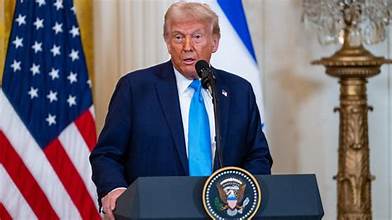
Pakistan Considers Trump’s Gaza Proposal the Only Way Forward Amid Diplomatic Deadlocks
Trump’s Gaza Proposal: A Controversial Alternative
Donald Trump’s proposal for resolving the Gaza crisis was part of his broader “Deal of the Century” peace plan unveiled in 2020. The plan envisioned significant economic incentives for Palestinians, infrastructure development, and security guarantees. However, it was also criticized for heavily favoring Israeli security concerns, legitimizing Israeli settlements, and limiting Palestinian sovereignty.
The proposal was met with anger and outright rejection from Palestinian leadership. Many countries, including Pakistan at the time, voiced their concerns over its imbalance. Yet, years later, as violence and humanitarian crises in Gaza escalate, Islamabad seems to be reassessing its options.
Pakistan’s renewed consideration of Trump’s plan reflects not necessarily an endorsement of its every detail but rather a recognition that, amid the failures of other forums, this plan may at least provide a framework to break the deadlock.
Why Pakistan Views It as the “Only Way Forward”
Several factors explain Pakistan’s latest stance:
- Diplomatic Stagnation: With the UN paralyzed by geopolitical rivalries and the OIC divided, Islamabad sees little hope of progress through traditional channels.
- Humanitarian Urgency: Gaza’s humanitarian situation—marked by blockade, poverty, and repeated wars—requires immediate action. Pakistan believes Trump’s proposal, despite its flaws, may inject momentum into stalled talks.
- Geopolitical Realities: Israel’s strengthened regional ties with countries like the UAE, Bahrain, and Morocco mean that any peace plan must consider new dynamics. Trump’s proposal already accounted for these normalization efforts.
- U.S. Leverage: Whether under Trump or future American administrations, Washington remains the only power capable of pressuring Israel meaningfully. Pakistan’s position acknowledges this hard reality.
Criticism and Challenges Ahead
While Pakistan’s approach may seem pragmatic, it comes with challenges. Trump’s plan was largely dismissed by Palestinians, who viewed it as a betrayal of their aspirations for a sovereign state with East Jerusalem as its capital. If Islamabad aligns itself too closely with the plan, it risks alienating Palestinian leadership and grassroots movements.
Moreover, endorsing a U.S.-led framework could draw criticism from domestic political actors and religious groups in Pakistan, many of whom view Trump’s policies in the Middle East as hostile to Muslim interests.
Another challenge lies in the fact that Trump is no longer in office. While his political influence in the United States remains significant, especially among Republicans, it is uncertain whether his plan will ever be revived by a future administration. Pakistan may therefore be investing in a proposal that lacks immediate viability.
Pakistan’s Balancing Act
Despite these risks, Pakistan’s broader diplomatic strategy appears to be one of balance. On one hand, it continues to express unwavering solidarity with Palestinians. On the other, it acknowledges the need for a practical roadmap, even if it comes from an unconventional source.
This balancing act is also tied to Pakistan’s own geopolitical interests. Strong ties with the United States remain vital for economic, military, and diplomatic reasons. By cautiously considering Trump’s proposal, Pakistan may also be signaling its willingness to cooperate with Washington on issues of mutual concern.
Conclusion: A Difficult but Necessary Choice
Pakistan’s consideration of Trump’s Gaza proposal as the only way forward highlights the deep frustration with global institutions that have repeatedly failed to deliver justice for Palestinians. It is not an uncritical endorsement of the plan but rather an admission that the status quo cannot continue.
For the people of Gaza, the humanitarian urgency is undeniable. For Pakistan, the challenge lies in navigating between solidarity, pragmatism, and geopolitical necessity. Whether Trump’s proposal truly offers a sustainable path to peace remains uncertain. What is clear, however, is that Islamabad is no longer willing to wait for traditional forums to act.
As the crisis drags on, Pakistan’s stance may serve as a reflection of a broader shift in international diplomacy: moving away from symbolic solidarity and toward practical—if imperfect—solutions.