 by
by In a bold and emotionally charged statement, Jamaat-e-Islami (JI) chief Hafiz Naeem ur Rehman firmly rejected the idea of a two-state solution to the Israel-Palestine conflict, asserting that “there is only one state and that is Palestine.” His remarks have reignited conversations around Pakistan’s long-standing pro-Palestinian stance and the broader debate within the Muslim world about how to respond to Israel’s occupation and continued aggression in Gaza.
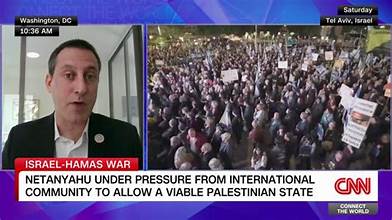
This declaration comes at a time when the international community remains divided on how to achieve peace in the region. While global powers, including the United States and European Union, continue to advocate for a two-state solution as the only viable path toward stability, many Muslim leaders and activists argue that this framework legitimizes Israel’s illegal occupation of Palestinian lands and fails to deliver justice for the Palestinian people. Hafiz Naeem’s statement underscores this frustration and reflects the sentiments of millions who view Palestine not as a divided entity but as a unified homeland illegally occupied by a colonial force.
Reaffirming Pakistan’s Pro-Palestinian Position
Pakistan has consistently stood by the Palestinian cause since its inception as a nation. Successive governments, whether civilian or military, have refused to recognize Israel, maintaining that full justice can only be achieved once the Palestinian people are granted their legitimate rights.
Hafiz Naeem’s remarks align with this historical stance. He reiterated that the creation of Israel was based on occupation, displacement, and injustice, and that recognizing it as a legitimate state would be tantamount to betraying the Palestinian struggle. His words reflect the ideological and emotional bond Pakistanis have shared with Palestine for decades—rooted in Islamic solidarity and a collective demand for justice.
“The land belongs to the Palestinians. Al-Quds is the heart of the Muslim world, and it can never belong to the occupiers,” Naeem declared during a public gathering, emphasizing that peace cannot come through compromise with oppression.
The Two-State Solution: A Fading Illusion
The two-state solution, originally proposed through the United Nations Partition Plan of 1947, envisioned separate Jewish and Arab states coexisting peacefully. However, over seventy years later, that vision remains unrealized—and arguably impossible.
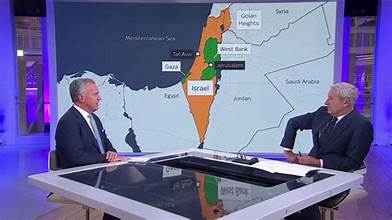
Israeli settlements have expanded deep into the West Bank, effectively fragmenting the territory meant for a Palestinian state. Gaza remains under siege, and East Jerusalem continues to face forced evictions and demolition of Palestinian homes. In this context, many see the two-state formula as a diplomatic illusion that benefits only Israel by preserving the status quo.
Hafiz Naeem’s rejection of the idea resonates with this perspective. He argued that the concept of a two-state solution has been used to delay genuine justice, distract the world from the atrocities in Gaza, and provide political cover for Israel’s expansionist policies. According to him, the only real solution lies in ending occupation entirely and restoring Palestine as one unified, independent state.
Muslim World’s Divided Response
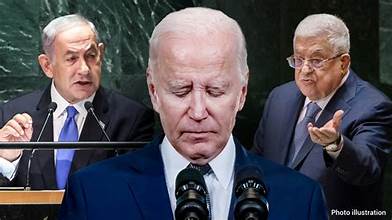
While Hafiz Naeem’s stance has found support among Pakistan’s conservative and religious circles, reactions in the broader Muslim world remain mixed. Some leaders and nations, particularly those pursuing normalization with Israel under U.S.-brokered agreements, have been reluctant to echo such strong positions.
The Abraham Accords, signed by several Arab states including the UAE, Bahrain, and Morocco, normalized relations with Israel in recent years. These agreements have drawn criticism from many Muslim scholars and political figures who view them as betrayals of the Palestinian cause. Hafiz Naeem’s comments, therefore, serve as a reminder of the ideological divide within the Muslim world—between those seeking strategic engagement and those demanding unwavering resistance.
For Pakistan, whose constitution and political ethos emphasize solidarity with oppressed Muslim nations, aligning with Hafiz Naeem’s view is not only politically relevant but morally consistent. The idea that “Palestine is the only state” reflects the country’s enduring moral opposition to Israel’s existence on occupied land.
Hafiz Naeem Dismisses Two-State Solution, Declares “Palestine Is the Only State”
Global Reactions and Shifting Narratives
While much of the Western world continues to push for a negotiated two-state peace plan, ground realities paint a different picture. The Israeli government’s policies—marked by expansion of settlements, blockade of Gaza, and recurring military offensives—have eroded the feasibility of a separate Palestinian state.
International human rights organizations, including Amnesty International and Human Rights Watch, have already declared Israel an apartheid state, citing systemic discrimination and oppression against Palestinians. This growing recognition has emboldened voices like Hafiz Naeem’s, who argue that Israel’s legitimacy must be questioned, not its borders negotiated.
Furthermore, the ongoing humanitarian catastrophe in Gaza has amplified public support for Palestine across the globe. From London to Jakarta, millions have protested against Israel’s bombardment of civilians, calling for an end to the siege and justice for the victims. In Pakistan, solidarity marches organized by Jamaat-e-Islami and other groups have drawn thousands, demonstrating the deep-rooted emotional and religious connection Pakistanis feel toward Palestine.
Moral, Political, and Religious Dimensions
Hafiz Naeem’s statement is not merely a political declaration—it carries religious and moral undertones. Al-Quds (Jerusalem) holds profound spiritual significance for Muslims as the first Qibla and the site of the Prophet Muhammad’s (PBUH) miraculous ascension (Mi’raj). The continued occupation and desecration of this sacred land evoke deep sorrow and anger within the Muslim ummah.
Politically, his rejection of the two-state narrative represents a defiance of Western-imposed frameworks that many believe ignore the core issue of justice. Naeem argues that peace cannot be built on compromise with oppression, and that true resolution can only come through complete liberation. His message echoes the sentiments of early Palestinian leaders who envisioned a democratic, inclusive Palestine where Muslims, Christians, and Jews could coexist peacefully—without colonial occupation.
The Way Forward: Justice Before Peace
Hafiz Naeem’s position reflects a broader sentiment gaining ground across the Muslim world—that peace without justice is meaningless. Calls for ceasefires or negotiations often fall short because they fail to address the root cause: the illegal occupation and denial of Palestinian sovereignty.
His speech underscores the need for Muslim unity and international accountability. He urged Muslim nations to move beyond mere condemnation and take practical steps—such as diplomatic boycotts, economic sanctions, and humanitarian support—to pressure Israel into ending its occupation.
He also criticized global institutions like the United Nations for their inaction, accusing them of double standards. “The same world that lectures others on human rights remains silent while Gaza burns,” he remarked, reflecting widespread frustration with international hypocrisy.
Conclusion
Hafiz Naeem ur Rehman’s emphatic rejection of the two-state solution and his assertion that “Palestine is the only state” serve as both a political statement and a moral challenge. At a time when global powers continue to prioritize strategic alliances over justice, his words remind the world that true peace cannot exist alongside oppression.
His stance aligns with Pakistan’s enduring commitment to the Palestinian cause and reinforces the call for a world order that upholds the rights of the oppressed. Whether or not the international community listens, voices like Hafiz Naeem’s ensure that the dream of a free and united Palestine remains alive in the hearts of millions.