 by
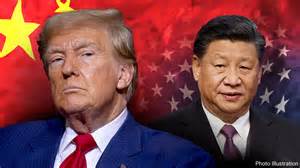
by In a move that has reignited global economic tensions, former U.S. President Donald Trump has signaled that he may cancel his upcoming meeting with Chinese President Xi Jinping. Alongside this announcement, Trump issued a stern warning of imposing a “massive tariff hike” on Chinese imports should Beijing fail to meet what he describes as “fair trade standards.” The remarks have sent shockwaves through international markets, raising concerns over the potential resurgence of a full-blown U.S.-China trade war.
This development comes at a crucial time when both nations are grappling with economic challenges and are seeking to assert dominance in global trade, technology, and geopolitics. Trump’s latest statements appear to be both a campaign strategy and an economic maneuver, aimed at reaffirming his hardline stance on China while appealing to domestic manufacturing and labor sectors.
A New Phase in U.S.-China Tensions
The relationship between Washington and Beijing has long been characterized by rivalry and negotiation, with trade disputes serving as one of the most contentious points. During Trump’s presidency, the United States and China engaged in a series of tariff exchanges, each side imposing billions of dollars in levies on the other’s goods.
Now, as Trump considers another presidential run, his remarks about canceling the meeting with Xi could signal a return to that aggressive trade posture. He accused China of “taking advantage of American workers” and warned that if Beijing does not agree to “mutually beneficial” trade reforms, the U.S. will have “no choice but to implement massive tariffs.”
The threat, though not new, carries significant weight, especially considering Trump’s previous administration’s impact on global supply chains. During the 2018–2019 trade war, tariffs affected everything from steel and aluminum to consumer electronics and agricultural exports, forcing both sides to absorb billions in economic losses.
The Political Context Behind Trump’s Warning
Observers suggest that Trump’s latest comments are not merely about trade policy—they are deeply intertwined with U.S. domestic politics. By positioning himself once again as a defender of American industry against Chinese competition, Trump aims to energize his political base ahead of the upcoming election cycle.
His rhetoric focuses on restoring American manufacturing jobs, reducing dependency on Chinese imports, and pressuring U.S. corporations to “bring production back home.” These themes have been central to Trump’s economic message since 2016, and they continue to resonate with a large segment of the American electorate who feel left behind by globalization.
However, critics argue that Trump’s approach risks destabilizing fragile trade relationships and harming U.S. consumers, who could face higher prices as a result of tariffs. They warn that escalating tariffs could trigger retaliatory measures from China, potentially affecting industries like technology, agriculture, and automotive manufacturing.

China’s Likely Response
Beijing has not yet issued an official statement regarding Trump’s latest comments, but analysts predict that Chinese officials will tread cautiously. While China has shown resilience in previous trade disputes, it is currently navigating a complex economic landscape marked by slower growth, real estate crises, and global supply chain adjustments.
China’s leadership may interpret Trump’s remarks as political posturing rather than a formal policy announcement. However, should tariffs be reinstated or expanded under a future Trump administration, Beijing would likely respond with countermeasures designed to protect key sectors and maintain leverage in negotiations.
Economically, China may also look to strengthen ties with other major partners, such as the European Union, Russia, and nations within the Belt and Road Initiative, to mitigate potential fallout from renewed U.S. tariffs.
Global Market Reactions
Following Trump’s statements, global markets experienced a wave of uncertainty. Stock indices in both the U.S. and Asia showed mild fluctuations as investors evaluated the potential risks of renewed trade tensions. The Chinese yuan experienced minor depreciation against the U.S. dollar, reflecting investor caution.
Economists warn that the threat of escalating tariffs could disrupt global trade flows once again, at a time when the world economy is still recovering from pandemic-related disruptions and geopolitical conflicts. Sectors like technology, consumer electronics, and energy could face renewed challenges, especially as multinational companies reassess their supply chain dependencies on China.
For global investors, the key question remains whether Trump’s threats will materialize into concrete policy or remain a part of his broader political messaging. Regardless, uncertainty surrounding U.S.-China relations continues to loom large over the international economic landscape.
Trade Tariffs and the U.S. Economy
If implemented, Trump’s proposed “massive tariff hike” could have far-reaching consequences for the American economy. While tariffs are intended to protect domestic industries from foreign competition, they also tend to raise the cost of imported goods.
During Trump’s first term, tariffs on Chinese imports led to price increases in several key sectors, including electronics, clothing, and machinery. U.S. farmers also suffered significant losses as China retaliated by imposing tariffs on American agricultural exports, particularly soybeans and pork.
Economists caution that another round of tariffs could strain the purchasing power of American consumers and reignite inflationary pressures. At the same time, it could push U.S. companies to diversify their manufacturing bases to countries like Vietnam, India, and Mexico, further shifting the dynamics of global production.

Strategic Rivalry Beyond Trade
Beyond economic concerns, Trump’s latest warning underscores the broader strategic rivalry between the United States and China. The two powers are locked in competition not just for trade supremacy, but also for technological dominance, military influence, and geopolitical leverage across Asia and beyond.
Issues such as Taiwan, the South China Sea, and semiconductor manufacturing have become flashpoints in the U.S.-China relationship. Trump’s remarks may be seen as an attempt to pressure China on multiple fronts, reinforcing his “America First” philosophy while reminding Beijing of U.S. leverage in global markets.
Meanwhile, President Xi’s administration continues to project confidence in China’s long-term economic model, emphasizing self-reliance in technology, renewable energy, and advanced manufacturing. However, the possibility of renewed tariffs could test that resilience, particularly if foreign investors begin pulling back from Chinese markets.
Economic Analysts Weigh In
Financial analysts and trade experts have offered mixed reactions to Trump’s statements. Some believe that his threat of massive tariffs is a negotiating tactic designed to extract concessions from Beijing ahead of any future trade talks. Others caution that even the perception of instability could deter investment and trigger volatility in global markets.
According to U.S.-based economists, the best-case scenario would involve renewed dialogue between the two nations aimed at addressing trade imbalances and intellectual property concerns. However, the worst-case scenario—a full-scale tariff escalation—could shave percentage points off global GDP growth and trigger a ripple effect across industries.
A Crossroads for Global Trade
As Trump weighs canceling his meeting with Xi, the world is watching closely. Whether this is a calculated political move or a genuine policy threat, the implications are significant. Both the U.S. and China stand at a crossroads where cooperation or confrontation will shape the future of international trade and economic stability.
For now, the situation remains fluid. If the meeting proceeds, it could open doors for constructive dialogue. But if Trump follows through with his threats, the next chapter of the U.S.-China trade conflict could be even more intense than the last.
Either way, one thing is clear: the global economy will continue to feel the ripple effects of every decision made between these two economic giants.