 by
by U.S. President Donald Trump’s recent visit to Japan marked a high-profile diplomatic engagement that combined pageantry, political symbolism, and economic discussions. Greeted with an elaborate royal welcome by Emperor Naruhito and Empress Masako, Trump’s state visit underscored the close alliance between the United States and Japan while also signaling potential progress in easing global trade tensions — particularly those involving China.
The trip, filled with ceremonial grandeur and strategic dialogue, was as much about reinforcing bilateral ties as it was about positioning the U.S. amid a shifting global economic landscape. As Trump’s warm reception in Tokyo made global headlines, investors and analysts alike noted renewed optimism that the U.S.–China trade war — which had rattled markets and slowed global growth — might finally be headed toward a truce.
A Royal Reception: Symbol of Deep Friendship
President Trump’s arrival in Japan was met with a ceremonial welcome befitting a state guest of honor. The visit, taking place shortly after Emperor Naruhito’s ascension to the Chrysanthemum Throne, carried special significance as Trump became the first foreign leader to meet the new emperor.
The official state ceremony, held at Tokyo’s Imperial Palace, showcased the rich traditions of Japanese diplomacy. Trump and First Lady Melania Trump were greeted by the Emperor and Empress with military honors, national anthems, and a red-carpet procession.
During their meeting, Emperor Naruhito expressed his desire to strengthen the long-standing friendship between Japan and the United States. President Trump reciprocated the sentiment, describing the occasion as “an honor of the highest order” and praising Japan as one of America’s closest allies and partners in promoting peace and stability in the Asia-Pacific region.
This royal welcome wasn’t just ceremonial — it reflected the enduring strength of U.S.–Japan relations, built on decades of economic cooperation, military partnership, and mutual respect.
Strategic Diplomacy: Beyond Symbolism
While the optics of the royal welcome captured global attention, the visit’s deeper purpose was strategic. The two nations discussed a range of topics — from defense cooperation and regional security to trade and technology.
Japan remains one of America’s most important allies in Asia, both economically and militarily. With growing tensions in the South China Sea and the broader Indo-Pacific region, strengthening U.S.–Japan collaboration serves as a cornerstone of Washington’s regional strategy.
During bilateral talks with Japanese Prime Minister Fumio Kishida, Trump emphasized his administration’s commitment to ensuring “a free and open Indo-Pacific.” Discussions also covered North Korea’s missile tests, the security situation in Taiwan, and the need for coordinated efforts to counter emerging threats.
In a joint press briefing, Prime Minister Kishida praised the U.S.–Japan alliance as “stronger than ever” and highlighted shared objectives, including promoting regional peace, ensuring economic resilience, and supporting fair trade practices.
Trade Discussions: The Heart of the Visit
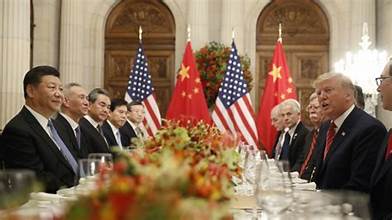
At the center of Trump’s visit was the topic of trade — both with Japan and in the broader context of U.S.–China relations. Japan, being one of the largest economies in the world and a key trading partner of the United States, has a vested interest in the stability of global trade flows.
The Trump administration’s trade policies, often characterized by tariffs and renegotiations, had reshaped America’s economic relations with many countries. While Japan sought to avoid a direct trade conflict, it also aimed to secure more favorable terms in its export-driven economy.
During the talks, both sides expressed optimism about reaching a bilateral trade understanding that would benefit farmers, manufacturers, and technology sectors in both countries. U.S. officials noted progress in discussions related to auto imports, digital trade, and agricultural exports — areas that had previously seen tension.
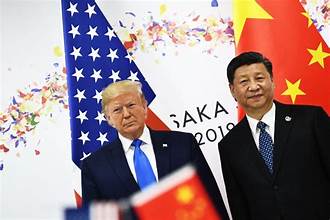
Importantly, the visit also provided an opportunity for Trump to reassure markets that Washington’s trade tensions with China were showing signs of easing. Investors, weary of the prolonged trade war, welcomed Trump’s remarks that “significant progress” had been made in negotiations with Beijing.
Hopes Rise for a U.S.–China Trade Truce
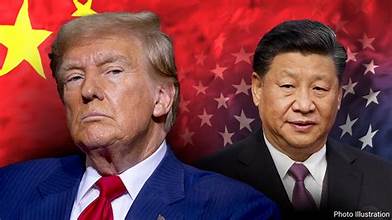
Perhaps the most closely watched aspect of Trump’s trip was his tone regarding China. For months, global markets had been rattled by escalating tariffs and retaliatory measures between the world’s two largest economies. These disputes disrupted supply chains, increased production costs, and raised fears of a global slowdown.
In Japan, however, Trump struck a notably more conciliatory tone. He hinted that discussions with Chinese officials were moving in a “positive direction” and expressed confidence that a “good deal for both nations” was possible.
Such remarks were enough to lift investor sentiment. Asian and European markets responded favorably, with stocks rising amid renewed hopes that a trade truce might soon materialize. Analysts interpreted Trump’s comments as a signal that both Washington and Beijing were seeking to de-escalate tensions and avoid further economic damage.
Chinese media, too, cautiously welcomed the shift in tone, describing it as a “constructive step” toward resolving one of the most significant trade disputes in recent history.
Economic Implications for the Global Market
The potential thawing of U.S.–China trade relations, coupled with strong diplomatic engagement between Washington and Tokyo, holds major implications for the global economy.
1. Market Stability
Global markets crave certainty. Any indication that two of the world’s largest economies are moving toward cooperation rather than confrontation has a stabilizing effect. The optimism following Trump’s visit to Japan was reflected in stronger stock performance across Asia, Europe, and North America.
2. Supply Chain Reassurance
The prolonged trade war had disrupted supply chains, particularly in electronics, automotive, and manufacturing sectors. An easing of tensions offers hope that global trade logistics can return to normal, reducing costs for producers and consumers alike.
3. Boost to U.S. and Japanese Businesses
Improved trade ties benefit exporters and investors in both countries. For Japan, stability in the global market helps sustain its export-driven economy, while for the United States, it opens opportunities to expand agricultural and industrial exports.
4. Strengthened Regional Cooperation
Japan’s mediation role and consistent diplomatic engagement position it as a key player in fostering balance within Asia’s economic framework. A successful U.S.–China truce could also pave the way for greater regional cooperation through platforms like APEC and ASEAN.
Defense and Security: Reinforcing the Alliance
Beyond trade, Trump’s visit also reaffirmed the military and strategic partnership between the United States and Japan. The two allies discussed the ongoing U.S. troop presence in Japan and the modernization of joint defense capabilities.
In light of evolving regional challenges — from North Korea’s weapons development to growing Chinese naval assertiveness — both sides agreed on the need to strengthen defense cooperation and intelligence sharing.
Japan’s commitment to increasing its defense budget and supporting freedom of navigation in the Indo-Pacific aligns closely with U.S. strategic goals. Trump praised Japan’s contributions, calling it a “pillar of stability and peace” in the region.
Cultural Diplomacy and Public Engagement
Amid high-level meetings and policy discussions, the visit also featured moments of cultural diplomacy. President Trump and First Lady Melania Trump attended a traditional Japanese dinner, visited cultural landmarks, and interacted with Japanese citizens.
One of the highlights was Trump’s attendance at a sumo wrestling tournament in Tokyo, where he presented a trophy — the “President’s Cup” — to the champion. The event symbolized the blending of politics and culture, showcasing mutual respect and friendship between the two nations.
These gestures, though symbolic, play an important role in strengthening people-to-people connections and fostering goodwill beyond formal diplomacy.
Global Reactions to Trump’s Visit
The visit drew significant international attention. World leaders and analysts viewed Trump’s outreach in Japan as part of a broader effort to recalibrate U.S. foreign policy in Asia.
European diplomats welcomed the renewed focus on diplomacy and trade stability, while Chinese officials cautiously observed the discussions, interpreting Trump’s softer rhetoric as a potential opening for negotiation.
Global media highlighted the contrast between the ceremonial grandeur of Japan’s welcome and the pragmatic tone of trade discussions — framing the visit as both a diplomatic celebration and a signal of shifting global dynamics.
Conclusion: A Symbolic and Strategic Success
President Trump’s royal welcome in Japan was more than a display of diplomatic formality — it was a reflection of the deep strategic partnership between two nations shaping the future of global politics and economics.
The combination of ceremonial warmth, constructive dialogue, and encouraging trade signals made the visit a noteworthy moment in international relations. It projected an image of confidence, collaboration, and cautious optimism at a time when the global economy needed reassurance.
As the world watches the evolving U.S.–China negotiations, Trump’s visit to Japan stands as a reminder of the power of diplomacy in bridging divides, promoting stability, and fostering economic recovery. For both Washington and Tokyo, it reaffirmed an enduring alliance — one built not just on shared interests but on mutual respect and a shared vision for peace and prosperity in the 21st century.