
 by
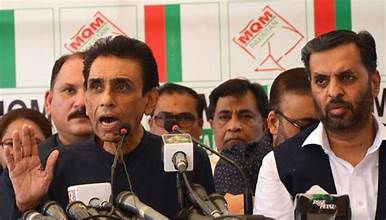
by In a significant political development, the Muttahida Qaumi Movement–Pakistan (MQM-P) has urged the federal government to implement the Sindh Provincial Assembly’s local government (LG) resolution across the country through a constitutional amendment. The party believes that empowering local governments nationwide is essential for strengthening democracy, improving governance, and ensuring that the benefits of development reach citizens at the grassroots level.
This renewed call by MQM-P comes at a time when debates over decentralization, governance, and provincial autonomy have intensified across Pakistan. The demand highlights the growing realization that centralized systems often fail to address the unique challenges faced by local communities. MQM-P’s push for nationwide implementation of the LG resolution aims to bring structural reforms that can redefine how public service delivery and governance are managed in Pakistan.
Background: MQM-P’s Longstanding Advocacy for Local Governance
The MQM-P has consistently been one of the strongest advocates for empowering local governments. Since its inception, the party has championed the cause of urban representation, devolution of power, and equitable resource distribution. The roots of MQM-P’s local governance philosophy lie in its commitment to the principles of participatory democracy and community-based decision-making.
Over the decades, MQM-P has criticized both provincial and federal governments for concentrating administrative powers at higher levels, leaving local bodies underfunded and ineffective. The party maintains that genuine democracy can only flourish when authority, resources, and accountability are delegated to the local tier of governance.
The recent resolution passed by the Sindh Assembly on strengthening local governments has reignited this debate, and MQM-P’s demand for its implementation nationwide marks a major step toward institutionalizing local governance through constitutional means.
The Sindh Assembly’s Local Government Resolution
Earlier this year, the Sindh Provincial Assembly passed a resolution aimed at reinforcing the autonomy of local government institutions. The resolution emphasized the need for ensuring fiscal independence, administrative control, and direct accountability of local councils.
The resolution also highlighted the inefficiencies in current systems, where municipal corporations and district councils often lack the authority to execute development projects or manage funds independently. It called for legislative changes to make local governments truly representative and functional, aligning them with the vision laid out in Article 140-A of the Constitution of Pakistan, which mandates provinces to establish empowered local government systems.
MQM-P argues that this resolution should not be confined to Sindh alone but should serve as a model for the entire country. According to the party leadership, the problems faced by urban centers like Karachi, Hyderabad, Lahore, and Peshawar are rooted in the absence of empowered local governance structures.
MQM-P’s Call for a Constitutional Amendment
MQM-P’s latest proposal goes beyond policy discussions—it seeks a constitutional amendment to ensure that the spirit of local governance becomes a permanent and enforceable part of Pakistan’s political framework.
Party leaders, during recent press conferences and assembly sessions, emphasized that while Article 140-A provides a constitutional basis for local governments, it lacks the enforcement mechanism necessary to ensure compliance by provincial administrations. MQM-P suggests that a new amendment should:
- Define the structure, powers, and responsibilities of local governments across all provinces.
- Guarantee fiscal autonomy by ensuring a fixed share of national and provincial revenue for local bodies.
- Make local government elections mandatory within a specific timeframe after general elections.
- Create constitutional safeguards preventing provinces from arbitrarily dissolving local councils.
- Ensure judicial oversight to protect the functioning of elected local bodies.
The proposed amendment, MQM-P argues, would protect local governance from political manipulation and guarantee consistent service delivery, regardless of which political party is in power at the provincial or federal level.

Addressing Urban Governance Challenges
Karachi, Pakistan’s largest city and MQM-P’s traditional stronghold, serves as a prime example of how weak local governance structures can paralyze urban development. Despite being the economic engine of Pakistan, Karachi continues to face challenges such as poor waste management, inadequate water supply, traffic congestion, and outdated infrastructure.
MQM-P leaders argue that these problems persist because the city’s municipal authorities lack financial and administrative autonomy. Without direct control over city management, local representatives cannot effectively address citizens’ concerns.
By implementing a nationwide local government reform through constitutional means, MQM-P envisions a future where cities like Karachi can independently manage their resources, plan development projects, and coordinate urban services without bureaucratic delays.
The same principle, the party argues, applies to rural areas as well. Strong local councils can improve public service delivery in villages and small towns, particularly in sectors such as education, healthcare, and sanitation.
A Step Toward Strengthening Democracy
MQM-P’s call is not merely an administrative proposal—it is deeply rooted in the democratic ethos. Political analysts view this move as part of a broader struggle to make democracy more participatory and inclusive.
In Pakistan’s current system, most decision-making powers reside with provincial and federal bureaucracies. Citizens, particularly at the local level, have limited influence over how development funds are allocated or how policies are implemented in their communities.
By institutionalizing empowered local governments through a constitutional amendment, Pakistan could take a major step toward strengthening democratic governance. This approach would allow citizens to elect representatives who directly manage local issues, thus enhancing accountability and transparency.
Political Reactions and National Implications
The MQM-P’s proposal has sparked political debate across the country. Some political parties, particularly those with strong roots in urban areas, have expressed support for the idea. However, others remain cautious, fearing that decentralization might weaken provincial authority or create administrative overlap.
In Sindh, the Pakistan Peoples Party (PPP), which currently governs the province, has acknowledged the importance of local governance but insists that existing laws already fulfill constitutional requirements. Nevertheless, MQM-P argues that the implementation has been inconsistent and insufficient.
At the national level, several parties have welcomed the discussion, noting that Pakistan’s governance model needs restructuring to cope with modern administrative challenges. Analysts believe that MQM-P’s demand could pave the way for a new national dialogue on redefining the relationship between federal, provincial, and local governments.
Legal and Constitutional Context
Article 140-A of the Constitution of Pakistan already provides the framework for establishing local governments, stating that “each province shall, by law, establish a local government system and devolve political, administrative and financial responsibility and authority to the elected representatives of the local governments.”
However, the absence of a clear enforcement mechanism has allowed provinces to interpret this clause differently. In many cases, provincial assemblies have passed laws that technically establish local bodies but fail to devolve meaningful powers to them.
MQM-P’s demand for a constitutional amendment seeks to bridge this gap by creating binding obligations for all provincial governments. Such an amendment would require a two-thirds majority in Parliament, making political consensus essential for its success.
The Road Ahead
If implemented, the proposed constitutional amendment could significantly transform Pakistan’s governance landscape. Local governments could emerge as the primary units of development and public service, reducing dependency on provincial bureaucracies and ensuring faster responses to citizens’ needs.
For this transformation to occur, however, political will and bipartisan cooperation are crucial. MQM-P has expressed its readiness to engage with all political parties, civil society organizations, and legal experts to draft a comprehensive amendment proposal. The party envisions a national movement for devolution—one that transcends party lines and focuses on improving citizens’ lives.
Conclusion
MQM-P’s call for the federal government to enforce the Sindh Assembly’s local government resolution nationwide through a constitutional amendment represents a critical moment in Pakistan’s democratic evolution. It reflects a growing awareness that centralized governance models are no longer sustainable in a country with diverse regional, urban, and rural dynamics.
By advocating for empowered, autonomous, and constitutionally protected local bodies, MQM-P is pushing for a shift from symbolic democracy to practical governance—where citizens have direct control over the decisions that shape their everyday lives.
The success of this initiative will depend on whether Pakistan’s political leadership can rise above partisan divides and embrace true devolution. If realized, such a reform could lay the foundation for a more accountable, inclusive, and effective system of governance—fulfilling the long-standing promise of democracy that works for the people and by the people at every level.