 by
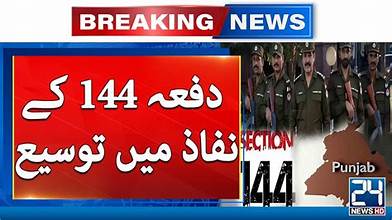
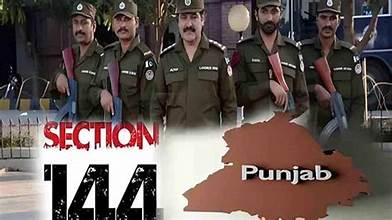
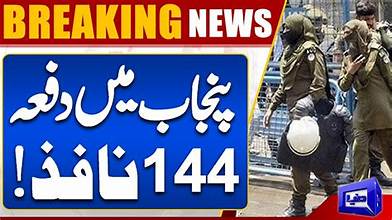
by The Punjab government’s recent announcement to extend the enforcement of Section 144 of the Code of Criminal Procedure (CrPC) until November 8 has once again placed this colonial-era law at the center of public discourse. For many, it has become a familiar headline, a recurring measure invoked by authorities in the name of public order. But what does this extension truly mean for the millions of residents in Punjab? Is it a necessary tool for maintaining peace, or does it represent an overreach that stifles fundamental democratic freedoms?
This blog post will delve beyond the headline to unpack the nuances of Section 144, explore the official rationale behind its prolonged use in Punjab, analyze its wide-ranging impact on daily life and civil liberties, and examine the ongoing debate surrounding its application in a modern democracy.
Understanding the Legal Instrument: What Exactly is Section 144?
To comprehend the current situation, one must first understand the legal machinery at play. Section 144 of the CrPC is a powerful provision that grants a state government, District Magistrate, or any other empowered executive magistrate the authority to issue orders in urgent cases of nuisance or apprehended danger.
In essence, it is a preemptive tool designed to prevent imminent threats to public safety and tranquility. The orders passed under this section can:
- Prohibit the assembly of four or more people in a specified area.
- Place restrictions on carrying any kind of weapon.
- Impose bans on specific activities, such as public speeches, protests, or even the internet in extreme cases.
Crucially, an order under Section 144 is temporary by design. Initially, it remains in force for two months, but the state government has the power to extend it further, as seen in the current case in Punjab. The violation of such an order is a cognizable offense, meaning police can make an arrest without a warrant, and it is punishable under Section 188 of the Indian Penal Code (IPC).
The Official Rationale: Why has the Punjab Government Chosen to Extend?
The government’s decision is never taken in a vacuum. Officials have cited a confluence of factors justifying the need for continued vigilance and the application of this restrictive law.
- Preventing Political Unrest and Law & Order Challenges: Punjab, with its vibrant and often charged political landscape, is no stranger to large-scale protests and agitations. The government has argued that the extension is crucial to prevent rival political groups from mobilizing in a way that could lead to clashes, violence, or damage to public property. By restricting assemblies, the administration aims to maintain a fragile peace and provide a “cooling-off” period during politically sensitive times.
- Combating Misinformation and Hate Speech: In an age where rumors and inflammatory content can spread like wildfire on social media, authorities often express concern about the potential for such information to trigger communal tensions or mob violence. Section 144 acts as a legal buffer, allowing them to move quickly to disperse crowds that may have gathered based on false information or to preempt gatherings intended to incite hatred.
- A Generalized Tool for “Apprehended Danger”: Sometimes, the threat is not specific but perceived as a general atmosphere of volatility. Intelligence inputs about potential disturbances, the anniversary of a historically sensitive event, or even ongoing criminal investigations can lead magistrates to “apprehend danger.” In such scenarios, Section 144 is deployed as a blanket measure to maintain a state of alert and deter any potential trouble-makers.
The Ground Reality: Impact on the Common Citizen
While the government’s intentions may be framed in the language of public safety, the enforcement of Section 144 has a tangible and often profound impact on the daily lives of ordinary citizens.
- The Chilling Effect on Democratic Expression: The most significant casualty of a prolonged Section 144 is the fundamental right to peaceful assembly, a cornerstone of any democracy. It effectively suspends the ability of citizens to stage protests, hold public meetings, or organize demonstrations against government policies or corporate actions. For civil society groups, activists, and political opponents, this creates a significant barrier to expressing dissent and holding power accountable.
- Social and Cultural Disruption: The law’s reach extends beyond the political sphere. Cultural festivals, religious processions, and even large wedding gatherings can technically fall foul of the assembly ban. While authorities often grant exemptions, the pervasive presence of the order creates an atmosphere of uncertainty and fear, causing people to cancel or scale back important social and cultural events.
- Economic Consequences: The restrictions can have a trickle-down effect on the local economy. Markets that thrive during festivals see reduced footfall, event planners face cancellations, and the transport and hospitality sectors can experience a dip. The informal economy, which relies on public congregations, is particularly vulnerable.
- A Sense of Living Under a “Police Raj”: For many residents, the continuous extension of Section 144 fosters a feeling of being governed by decree rather than by dialogue. The constant threat of police action for simply gathering in a group of four can lead to a sense of alienation and erode public trust in the administration. It normalizes a state of exception, where extraordinary restrictions become a permanent feature of life.
The Great Debate: Necessary Evil or Democratic Erosion?
The use of Section 144 is perpetually caught in a fierce debate between the imperatives of security and the principles of liberty.
The “Necessary Evil” Argument:
Proponents argue that in a complex and often volatile state like Punjab, the government cannot afford to be complacent. They contend that:
- Prevention is better than cure: It is easier and safer to prevent a riot than to control one.
- It is a temporary, surgical tool: Used judiciously, it can de-escalate tensions without long-term damage.
- The government is ultimately responsible: The administration bears the blame if violence erupts, justifying its use of all available legal tools to prevent it.
The “Democratic Erosion” Argument:
Critics, including civil liberties organizations and legal experts, counter that the routine use of Section 144 is a blunt instrument that is fundamentally incompatible with a rights-based democracy. Their arguments include:
- It criminalizes normal life: The law is overly broad, making commonplace, harmless assemblies technically illegal.
- It is prone to misuse: The vague standard of “apprehended danger” gives the executive unfettered discretion, which can be (and has been) used to silence political opposition and suppress legitimate dissent.
- The Judiciary’s Stance: The Supreme Court of India has itself noted in various judgments that Section 144 cannot be used to suppress legitimate democratic expression and that its application must be based on specific, material facts, not vague fears.
Looking Beyond November 8: A Call for a Balanced Approach
As the new deadline of November 8 approaches, the question remains: what happens next? A perpetual state of emergency cannot be the answer. A more sustainable and rights-respecting approach is needed.
This could involve:
- More Nuanced and Targeted Orders: Instead of blanket bans on entire districts, the administration could issue specific, geographically limited orders based on concrete intelligence.
- Promoting Dialogue: The government should proactively engage with stakeholder communities to address grievances, rather than relying solely on prohibitory orders to keep them apart.
- Judicial Oversight: Stronger and quicker judicial review of extended 144 orders is essential to check executive overreach and ensure the restrictions are proportionate and necessary.
The extension of Section 144 in Punjab until November 8 is more than just an administrative decision; it is a reflection of the ongoing tension between order and liberty. While the intent to maintain public safety is undeniable, the prolonged reliance on such a sweeping measure comes at a high cost to democratic norms and civic life. Finding a balance that protects citizens without indefinitely suspending their fundamental rights is the paramount challenge facing the government and the people of Punjab.