 by
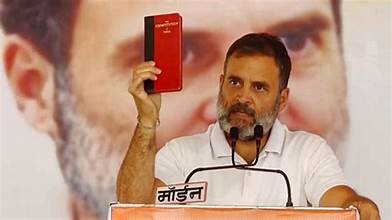
by In Indian surprising revelation that has sparked widespread discussion across India’s political and social landscape, Congress leader Rahul Gandhi disclosed that a Brazilian model had cast a vote in the Indian elections. The statement, which immediately went viral on social media, raised pressing questions about the integrity of India’s electoral system, the enforcement of citizenship laws, and the overall transparency of the democratic process.
While the comment was made during a public rally, it has since evolved into a larger debate — not merely about one incident, but about how efficiently India’s voting framework ensures legitimacy in one of the world’s largest democracies. This blog explores the background of the claim, its political implications, the potential loopholes in India’s voter verification mechanisms, and the broader message it sends about citizenship and democracy in a globalized era.
Rahul Gandhi’s Statement: A Spark of Controversy
Rahul Gandhi’s revelation came amid a charged political climate, as India prepares for another round of elections. While addressing a crowd, Gandhi claimed that a Brazilian model was among those who had participated in the Indian polls — implying that non-citizens may have gained access to the voting process.
Although he did not mention any names or provide specific evidence during his speech, the statement immediately became a talking point on social media platforms, news debates, and among political analysts. Critics of the Congress party accused Gandhi of exaggerating to question the credibility of the Election Commission, while supporters argued that the claim highlighted serious concerns about electoral oversight.
Regardless of political leanings, the remark has forced both the Election Commission of India (ECI) and government officials to reassess the transparency and robustness of India’s voting mechanisms.
India’s Election Framework: The Foundation of the World’s Largest Democracy
India, with over 900 million eligible voters, operates one of the most complex and extensive electoral systems in the world. The Election Commission of India is tasked with maintaining accurate voter lists, issuing identity cards, and ensuring that only Indian citizens aged 18 and above can participate in the democratic process.
Every voter must possess a valid Voter ID card (EPIC) and be registered on the electoral roll of their constituency. These records are regularly updated through verification drives and linked with other government databases to eliminate duplicates or fraudulent entries.
However, as technology evolves and cross-border movement becomes easier, even the most sophisticated systems can face challenges — particularly in detecting fake documents, fraudulent registrations, or administrative errors. The case mentioned by Rahul Gandhi may be rare, but if true, it underscores the need for continued vigilance and modernization of India’s electoral integrity systems.
The Global Dimension: Citizenship and Residency Overlaps
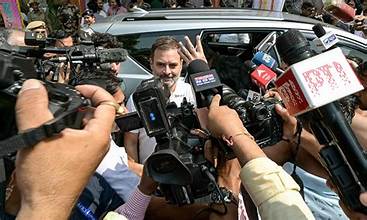
In an increasingly globalized world, international migration has blurred the lines between residency and citizenship. Thousands of foreigners live in India for work, study, or modeling assignments, while many Indians live abroad but retain voting rights as Non-Resident Indians (NRIs).
The alleged case of a Brazilian model voting in India brings attention to a sensitive question — how do authorities verify citizenship in a country as large and diverse as India?
While the law clearly restricts voting to Indian citizens, documentation loopholes, identity fraud, or human error could occasionally allow non-citizens to slip through the cracks. Moreover, digital forgery, false identity claims, and misuse of local documentation can make detection even more challenging.
If Indian Rahul Gandhi’s claim is verified, it could serve as a wake-up call to strengthen the verification process, ensuring that India’s elections remain free, fair, and transparent — beyond doubt or manipulation.
Political Reactions: A Nation Divided
The Indian political response to Rahul Gandhi’s statement has been intense and polarized. Leaders from the ruling Bharatiya Janata Party (BJP) dismissed the claim as “political theatre,” accusing Gandhi of attempting to create controversy where none existed. They demanded proof and urged the Election Commission to clarify the matter publicly.
Congress supporters, on the other hand, defended Gandhi, stating that his comments were meant to draw attention to systemic flaws rather than to target individuals. Some argued that his remark was symbolic — representing how corruption or negligence within institutions can compromise the sanctity of democracy.
Indian Independent observers have called for a transparent investigation. They argue that whether the story is literal or metaphorical, it highlights the growing public distrust in governance systems, which must be addressed through accountability, data transparency, and institutional reform.
Election Commission’s Stance and Possible Investigation
Following the uproar, several civil groups and opposition figures demanded that the Election Commission of India look into the matter. The Commission, known for its strict oversight, has yet to issue a detailed public response. However, sources within the ECI reportedly indicated that such incidents, if genuine, are rare but possible due to data errors or fraudulent identity claims.
A potential investigation could involve cross-checking voter lists, verifying suspicious entries, and coordinating with intelligence agencies to ensure that no foreign nationals are illegally registered as voters.
If confirmed, the discovery of such a case could have significant consequences — including legal proceedings against those involved, reforms to voter verification systems, and stricter documentation protocols for new registrants.
Broader Implications for Democracy and Trust
The controversy surrounding Rahul Gandhi’s statement extends far beyond one alleged incident. It cuts to the heart of what sustains a democracy: trust.
Democracies rely not only on institutions but also on the collective belief that every vote counts equally and legitimately. If citizens begin to suspect that elections can be manipulated, even unintentionally, it undermines confidence in the entire political process.
That is why even a single case — real or rumored — of a non-citizen voting becomes a matter of national concern. It is not about political gain or loss; it is about ensuring that the principles of representation, accountability, and fairness are protected.
Technology and the Future of Electoral Integrity
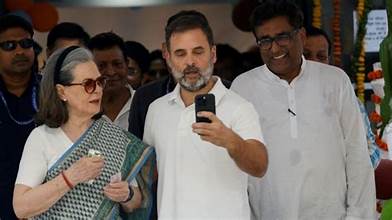
One positive outcome of this controversy could be a renewed focus on digital verification and data security in India’s electoral system.
In recent years, India has introduced biometric verification through Aadhaar, linking voter data with unique identification numbers. However, this system remains optional due to privacy concerns. If implemented securely, such technology could greatly reduce duplication and fake entries while ensuring that only legitimate citizens participate in elections.
Blockchain-based voting, AI-driven identity checks, and digital audits of voter rolls are also being explored as potential solutions. These innovations could help build a more resilient democracy, where transparency is not just promised but technologically guaranteed.
Public Sentiment: The Power of Perception
Indian Social media platforms have played a major role in shaping the narrative around this issue. Hashtags related to Rahul Gandhi’s statement trended for days, sparking memes, debates, and even misinformation.
For many, the idea of a foreign model voting in Indian elections became a symbol of how political discourse often mixes truth, satire, and speculation. Some online users dismissed the story as humorous exaggeration, while others viewed it as a legitimate warning about systemic vulnerabilities.
Ultimately, perception can often outweigh fact in the digital age. Whether or not the Brazilian model’s vote was real, the conversation has prompted millions to think critically about electoral participation and the mechanisms that uphold democracy.
Conclusion: A Lesson Beyond Politics
The controversy surrounding the Brazilian model voting in Indian elections is a reminder that democracy is only as strong as the systems and citizens that sustain it. Rahul Gandhi’s statement, regardless of its literal accuracy, has succeeded in drawing attention to the importance of electoral integrity, citizen awareness, and administrative accountability.
For India — a nation of over a billion people and diverse identities — ensuring that every vote is legitimate is both a monumental challenge and a sacred responsibility.
The Indian incident has sparked introspection, debate, and possibly reform. But more importantly, it has reaffirmed a timeless truth: democracy thrives not just on participation, but on trust — and trust must be earned, protected, and constantly renewed.
Key Takeaways Table
| Aspect | Details |
|---|---|
| Main Claim | Rahul Gandhi revealed that a Brazilian model allegedly voted in Indian elections |
| Political Context | Statement made during public rally amid heightened political tensions |
| Possible Implications | Raises concerns about voter verification and electoral integrity |
| Election Commission’s Role | May investigate and cross-check for irregularities |
| Opposition Response | BJP dismissed claim; Congress defended it as a systemic concern |
| Public Reaction | Mixed — some viewed it as satire, others as a serious warning |
| Potential Reforms | Stronger digital ID verification, Aadhaar linking, and data audits |
| Democratic Message | Highlights need for trust, transparency, and accountability |
| Global Lesson | In a globalized world, maintaining clear citizenship boundaries is essential for fair elections |


