
 by
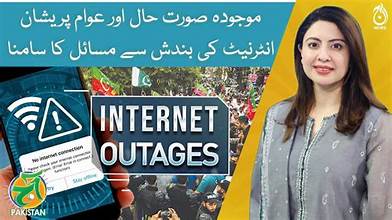
by The year 2025 will be remembered as one of the most disruptive periods for digital connectivity in Pakistan. From prolonged mobile internet shutdowns to repeated broadband slowdowns and unexplained service blackouts, the country experienced an unprecedented number of internet outages that affected businesses, education, healthcare, governance, and everyday life. What was once an occasional inconvenience turned into a recurring national crisis, raising serious questions about digital infrastructure resilience, governance, and the future of Pakistan’s internet economy.
As the world becomes increasingly reliant on uninterrupted connectivity, Pakistan’s experience in 2025 stood in stark contrast to global trends of digital expansion and stability. Instead of progressing toward seamless digital integration, the country struggled with persistent disruptions that impacted millions of users across urban and rural areas alike.
A Year Defined by Disruptions
Internet outages in Pakistan were not a new phenomenon before 2025, but their frequency, duration, and geographic spread reached unprecedented levels during the year. Users faced service interruptions during political events, protests, security operations, technical failures, and regulatory interventions. In many instances, outages lasted not hours but days, severely disrupting daily routines and economic activity.
Mobile internet users, in particular, bore the brunt of these disruptions. With a large portion of Pakistan’s population relying primarily on mobile data rather than fixed broadband, even partial shutdowns had widespread consequences. Social media platforms, messaging apps, online banking services, ride-hailing apps, and food delivery platforms frequently became inaccessible without warning.
For many Pakistanis, 2025 felt like a year of digital uncertainty—never knowing when the next outage would strike or how long it would last.
Political and Security-Driven Shutdowns
One of the major contributors to internet outages in 2025 was the use of connectivity restrictions as a security and law-and-order tool. During periods of political unrest, protests, or sensitive national events, authorities repeatedly resorted to mobile internet suspensions and throttling.
While officials often justified these measures as necessary for public safety, critics argued that blanket shutdowns punished the entire population for the actions of a few. Businesses, students, freelancers, and healthcare providers found themselves collateral damage in decisions taken without transparency or accountability.https://propakistani.pk
In several cities, residents experienced repeated shutdowns within a short span of time, eroding public trust in both service providers and regulators. The unpredictability of these measures made it nearly impossible for businesses to plan operations or for individuals to rely on digital services.
Economic Cost of a Disconnected Nation
The economic fallout of Pakistan’s internet outages in 2025 was severe and far-reaching. The country’s growing digital economy—once seen as a bright spot amid broader economic challenges—took a significant hit.
Impact on Freelancers and IT Exports
Pakistan is home to hundreds of thousands of freelancers who earn livelihoods through online platforms. For many of them, consistent internet access is not a luxury but a necessity. Repeated outages led to missed deadlines, canceled contracts, and damaged reputations with international clients.
IT companies and software houses reported productivity losses, delayed project deliveries, and increased operational costs as they scrambled to maintain backup connectivity solutions. In a global market where reliability is paramount, Pakistan’s reputation as a dependable outsourcing destination suffered.
Small Businesses and E-Commerce
Small and medium-sized enterprises that had embraced digital tools faced significant setbacks. Online stores, social media-based businesses, and digital payment systems were frequently disrupted, leading to lost sales and frustrated customers.
Food delivery services, ride-hailing platforms, and logistics companies reported sharp declines in activity during outage periods. For many gig workers, a single day of internet disruption meant a day without income.
Education in the Crossfire
The education sector was another major casualty of Pakistan’s internet outages in 2025. While traditional classrooms had resumed after previous disruptions, online learning remained an essential component of education for universities, training institutes, and professional courses.
Students preparing for exams, attending virtual lectures, or submitting assignments online often found themselves unable to access learning platforms. In remote and underserved areas, where digital education was meant to bridge gaps, outages instead widened inequalities.
Teachers and administrators expressed frustration at the lack of contingency planning, noting that repeated disruptions undermined the credibility of online education initiatives launched in recent years.

Healthcare and Emergency Services Affected
Internet connectivity has become increasingly vital for healthcare delivery, particularly for telemedicine, digital health records, and emergency coordination. In 2025, outages disrupted telehealth consultations, delayed access to test results, and hampered communication between healthcare providers.
In emergency situations, even short interruptions in connectivity can have life-threatening consequences. While hospitals often maintain internal networks, many patient-facing services rely on stable internet access. The year’s repeated disruptions exposed vulnerabilities in the integration of digital tools within Pakistan’s healthcare system.
Technical Failures and Infrastructure Weaknesses
Not all outages in 2025 were politically or security-driven. Several major disruptions were attributed to technical failures, including damaged submarine cables, power outages affecting data centers, and aging infrastructure unable to handle growing data demands.
Pakistan’s internet backbone remains heavily dependent on a limited number of international connectivity routes. When faults occur in these systems, the impact is felt nationwide. Despite repeated incidents, progress on diversifying and strengthening international bandwidth routes remained slow.
Telecom experts warned that without significant investment in infrastructure upgrades, such outages would continue to plague the country, regardless of policy changes.
Regulatory Challenges and Lack of Transparency
A recurring criticism throughout 2025 was the lack of clear communication surrounding internet shutdowns. Users often learned about outages only after services were cut, with little information on the scope, duration, or reason behind the disruptions.
The absence of publicly available data on shutdown decisions, legal justifications, and impact assessments fueled frustration among civil society groups and digital rights advocates. Calls for greater transparency and accountability went largely unanswered.
Regulatory uncertainty also discouraged foreign investment in Pakistan’s telecom and technology sectors. Investors cited concerns over operational unpredictability and regulatory risks as major deterrents.
Social and Psychological Impact
Beyond economic and institutional consequences, the internet outages of 2025 had a profound social and psychological impact. Connectivity is no longer just about information—it is about social interaction, emotional support, and community engagement.
Families struggled to stay in touch during outages, particularly when mobile networks were suspended. Social isolation increased during prolonged shutdowns, especially for young people accustomed to digital communication.
For journalists and media organizations, outages restricted the flow of information, making it harder to report accurately and in real time. In an era of rapid news cycles, even brief disruptions can shape public narratives in unintended ways.
Pakistan in a Global Context
Globally, internet shutdowns are increasingly scrutinized as violations of digital rights and obstacles to economic development. In 2025, Pakistan ranked among countries with the highest number of reported disruptions, placing it under international spotlight.
While some governments have moved toward minimizing shutdowns and adopting targeted, lawful measures, Pakistan’s approach appeared increasingly outdated. Experts warned that continued reliance on blunt connectivity restrictions could isolate the country digitally and economically.
As neighboring and peer economies expanded their digital infrastructure and services, Pakistan risked falling further behind in the global digital race.
Voices Calling for Reform
Throughout 2025, voices from across society called for change. Business leaders urged policymakers to recognize the internet as critical national infrastructure. Civil society organizations advocated for legal safeguards to prevent arbitrary shutdowns. Technologists emphasized the need for resilient, decentralized networks.
Some policymakers acknowledged these concerns, hinting at future reforms and alternative security measures. However, concrete steps remained limited by the end of the year, leaving many skeptical about meaningful progress.
The growing public discourse around digital rights suggested that internet access was no longer seen merely as a service, but as an essential component of citizenship in the modern age.
Lessons from a Difficult Year
The experience of 2025 offered several key lessons for Pakistan:
First, internet shutdowns carry far-reaching consequences that extend well beyond their intended objectives. The economic, social, and reputational costs often outweigh perceived benefits.
Second, resilient infrastructure and diversified connectivity routes are essential for a country of Pakistan’s size and digital ambitions. Technical failures will continue unless addressed through sustained investment.
Third, transparency and accountability are crucial for maintaining public trust. Clear communication can reduce panic, misinformation, and frustration during unavoidable disruptions.
Finally, digital connectivity must be treated as a strategic asset, not a dispensable convenience. In a world driven by data and communication, reliable internet access is foundational to growth and stability.
Looking Ahead
As Pakistan moves beyond 2025, the challenge will be to ensure that the year remains an exception rather than a new norm. Policymakers face a critical choice: continue down a path of recurring disruptions or commit to building a stable, rights-respecting digital ecosystem.
The demand for reliable internet access will only grow as more services move online and as younger generations enter the workforce. Meeting this demand will require political will, regulatory reform, infrastructure investment, and a shift in how connectivity is perceived at the highest levels of decision-making.
If the lessons of 2025 are taken seriously, Pakistan has an opportunity to emerge stronger and more digitally resilient. If not, the cost of remaining disconnected may prove far greater than any challenge posed by staying online.