 by
by The political landscape in Pakistan took a dramatic turn with the recent verdicts in the highly publicized Jinnah House attack case. The case, stemming from the violent protests that erupted after the arrest of former Prime Minister Imran Khan in May 2023, has been closely watched both nationally and internationally. Two prominent leaders of the Pakistan Tehreek-e-Insaf (PTI), Dr. Yasmin Rashid and Shah Mehmood Qureshi, found themselves on opposite ends of the legal outcome — one facing a lengthy prison term and the other walking free.
The Incident: Jinnah House Attack
The Jinnah House incident became one of the most controversial episodes in recent political history. On May 9, 2023, protests broke out across Pakistan after Imran Khan’s arrest. In Lahore, demonstrators stormed the Corps Commander House, also known as Jinnah House, causing damage to the historic building and its property. The government accused PTI leadership of inciting the unrest, while the party denied any role, claiming the protests were spontaneous reactions from the public.
Yasmin Rashid’s Conviction
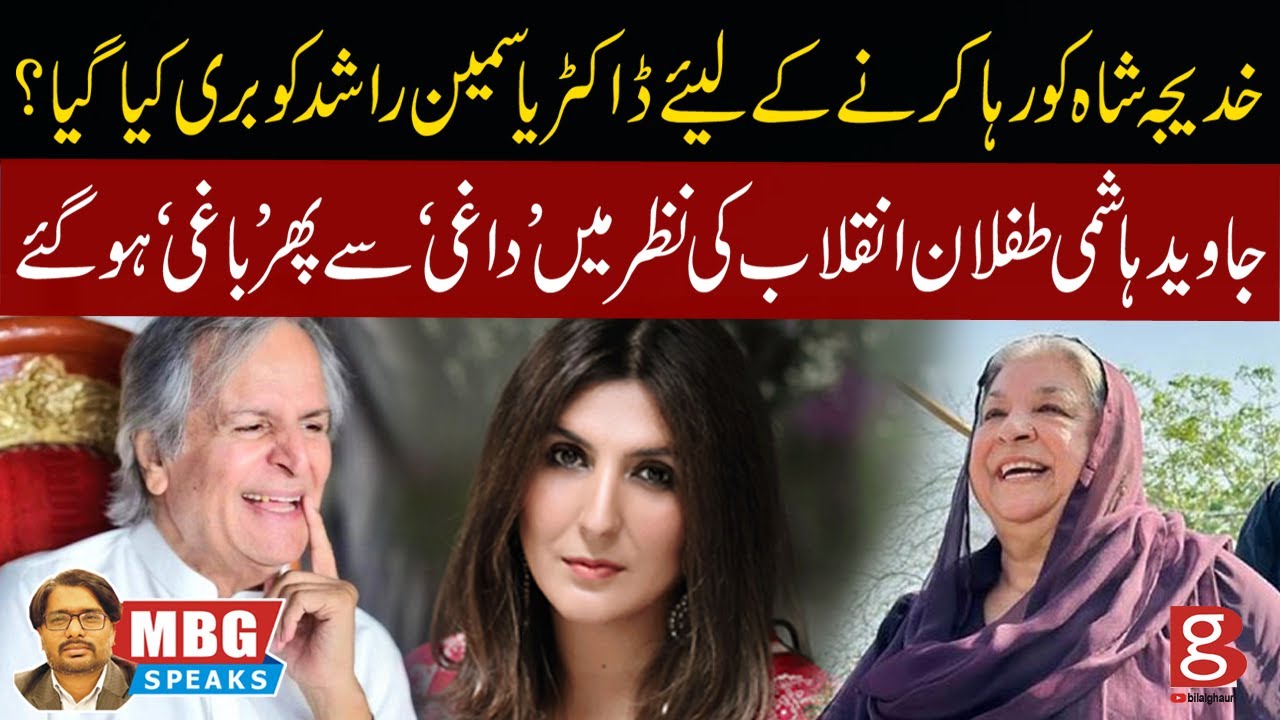
Dr. Yasmin Rashid, a senior PTI leader and former Punjab Health Minister, has been sentenced to 10 years in prison under anti-terrorism laws. The prosecution alleged that she played a key role in instigating the crowd and encouraging the attack on Jinnah House. Evidence presented in court included speeches, witness testimonies, and video footage purportedly showing her presence at the protest site.
Her lawyers, however, argued that she was participating in a peaceful protest and had no role in any violence. They claimed the evidence was circumstantial and politically motivated. Despite the defense’s arguments, the Anti-Terrorism Court found her guilty of provoking the attack, handing down a decade-long sentence. This ruling has sparked debates on the fairness of the trial and the state of political freedoms in the country.
Shah Mehmood Qureshi’s Acquittal
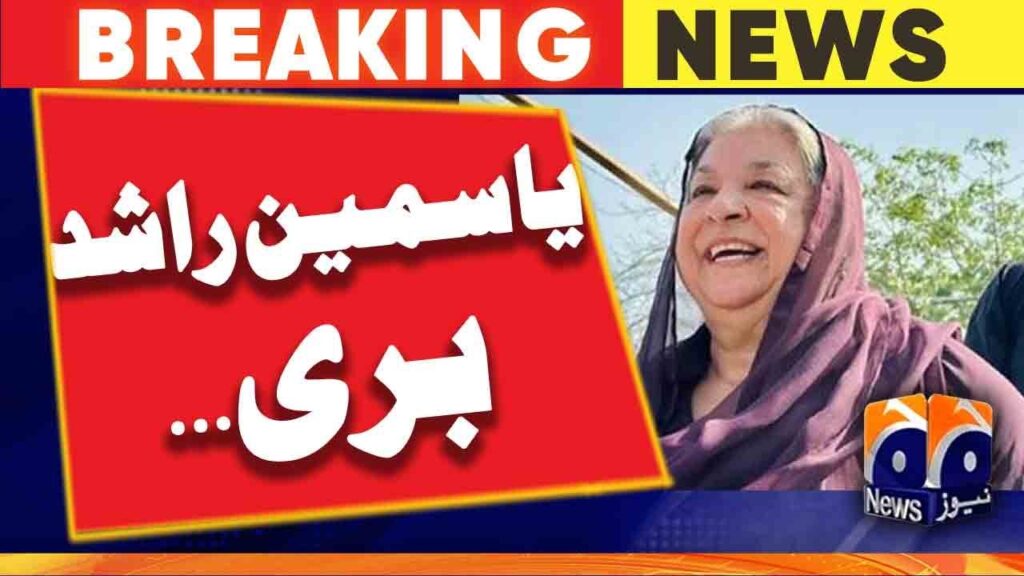
In stark contrast, former Foreign Minister and PTI Vice Chairman Shah Mehmood Qureshi was acquitted of all charges in the same case. The court stated that the prosecution failed to present concrete evidence linking him to the events at Jinnah House. Qureshi, who has been battling multiple cases since last year, hailed the verdict as a “victory for truth” and called for justice for other PTI leaders facing what he described as “politically motivated” trials.
His release is seen as a rare legal relief for PTI’s top leadership amid a broader crackdown on the party. Supporters celebrated outside the court, raising slogans in his favor and demanding similar outcomes for other imprisoned leaders.
Political Reactions
The verdict has drawn mixed reactions across the political spectrum. PTI leaders condemned Yasmin Rashid’s conviction, calling it an example of “selective justice,” while praising Qureshi’s acquittal. Government officials, on the other hand, maintained that the court’s decision was based on evidence and due process.
Human rights activists and legal experts remain divided. Some argue that the judiciary is being used as a tool for political engineering, while others believe that accountability is essential regardless of political affiliation. The case has also reignited discussions about the country’s anti-terrorism laws, with critics claiming they are often misused against political opponents.
Public Sentiment
Public opinion remains polarized. PTI supporters view Yasmin Rashid as a political prisoner and an example of government overreach. Her long-standing reputation as a principled and outspoken politician has only fueled sympathy among her followers. On the other hand, some segments of the public believe that those responsible for attacks on military and national heritage sites must face strict consequences to deter future incidents.
Impact on PTI and Future Politics
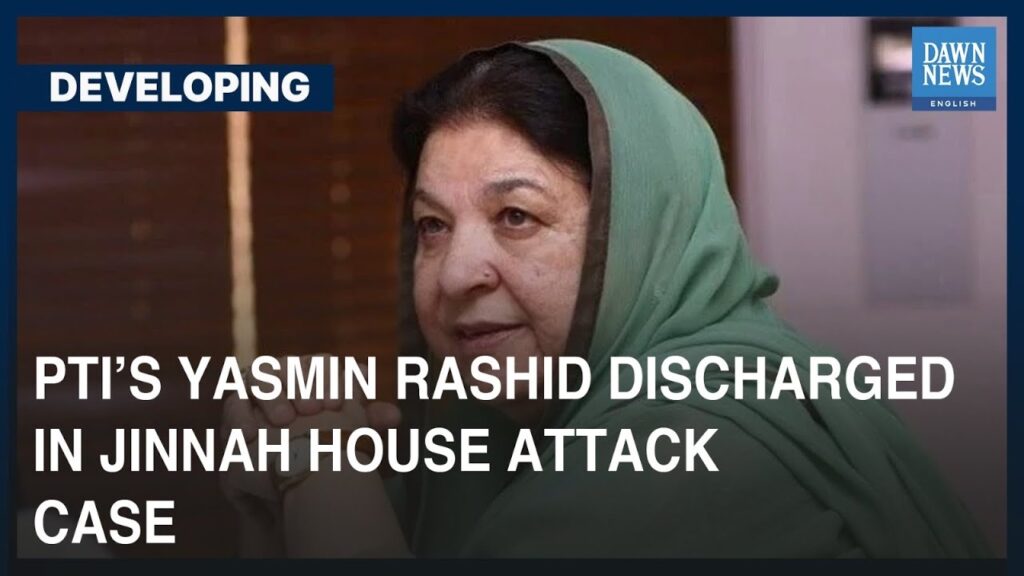
These verdicts could have significant implications for PTI’s future. Yasmin Rashid’s imprisonment removes a key political figure from the party’s active leadership at a time when it is already facing challenges in mobilizing ahead of upcoming elections. Qureshi’s acquittal, however, provides a glimmer of hope for the party, potentially allowing him to take a more prominent role in steering PTI’s political strategy.
Observers note that the ongoing legal battles against PTI leaders are part of a larger power struggle in Pakistan’s political system. With elections on the horizon, these developments could influence public perceptions, voter sentiment, and the overall balance of political power.
Conclusion
The sentencing of Yasmin Rashid and the acquittal of Shah Mehmood Qureshi in the Jinnah House attack case underscore the deeply polarized and contentious nature of Pakistani politics today. While the courts have spoken, the political and public debate is far from over. The contrasting outcomes serve as a reminder of how intertwined law, politics, and public opinion have become in shaping the country’s future.
The coming months will reveal whether these verdicts mark a turning point or just another chapter in the ongoing saga of political conflict in Pakistan. For now, the Jinnah House attack case remains a symbol of the nation’s divisions — both in the courtroom and on the streets.