by
by In a bizarre yet troubling incident highlighting flaws in Karachi’s digital traffic management system, a local resident received an E-Challan notice for a motorcycle that had been stolen four years ago. The case has reignited public debate over the reliability, accuracy, and accountability of Pakistan’s growing digital enforcement systems, especially as more government departments adopt automation and artificial intelligence for administrative control.
The Incident: A Shocking Discovery
It all began when Ahmed Khan (name changed for privacy), a resident of Karachi’s North Nazimabad, checked his vehicle details online after noticing a fine message from the Sindh Police’s E-Challan system. To his disbelief, the challan mentioned a traffic violation committed by a motorcycle he no longer owned — one that had been stolen back in 2020.
Ahmed had lodged an official theft complaint at his local police station years ago, complete with a First Information Report (FIR). Despite repeated follow-ups, the motorcycle was never recovered. Fast forward to 2025, and Ahmed was stunned to find his lost bike listed as active in the E-Challan records, bearing new violations and fines.
E-Challan System: How It Works
The E-Challan system in Sindh, particularly in Karachi, was introduced to modernize traffic enforcement. The idea was simple: replace manual ticketing with a camera-based automatic detection network. These cameras capture number plates of vehicles violating traffic rules—like signal violations, over-speeding, or wrong-lane driving—and issue digital challans sent to the vehicle owner’s address registered in the Excise & Taxation database.
While this system has significantly improved enforcement in major cities, its reliance on accurate and updated databases means any error or outdated record can create confusion or injustice.
In Ahmed’s case, the stolen motorcycle’s registration was never marked as inactive, allowing the system to continue assigning violations to his name years after the theft.
A Deep Flaw in the Digital Record System
The core of this problem lies in poor coordination between departments. The Sindh Police, Excise & Taxation Department, and Traffic Enforcement Unit operate on different databases, with little real-time integration.
Even though Ahmed had filed an FIR, the Excise Department apparently did not update the vehicle’s record to reflect that the motorcycle had been stolen. As a result, when the traffic monitoring cameras detected that plate number committing violations, the E-Challan system automatically issued fines to the registered owner.
This points to a serious flaw in the system:
- Lack of data synchronization between police theft records and Excise databases.
- No cross-verification process before issuing E-Challans for long-inactive or stolen vehicles.
- Inadequate public awareness about updating vehicle records post-theft.
Public Reaction: Outrage and Disbelief
Once Ahmed’s story surfaced on social media, hundreds of users came forward sharing similar experiences. Some claimed they received challans for vehicles they had sold years ago, while others complained about mistaken number plate readings or duplicate registration issues.
The incident trended briefly on X (formerly Twitter), where Karachi residents called for a complete audit of the E-Challan system. Several posts highlighted how the lack of human verification allows these errors to persist unchecked.
A few users even shared screenshots showing E-Challans issued for vehicles parked at home or under repair, further exposing weaknesses in the camera validation mechanism.
This growing frustration reflects a deeper concern: Pakistan’s digital systems are expanding faster than their regulatory oversight, leaving citizens vulnerable to automated errors without clear resolution channels.
Sindh Police’s Response
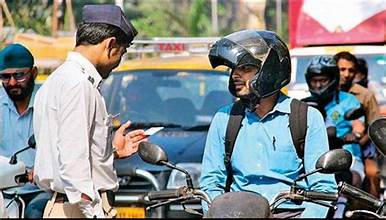
In the wake of public outrage, a senior Sindh Police Traffic official acknowledged that “technical errors can occur due to outdated data or duplication issues”. However, he maintained that the E-Challan system remains a “reliable and transparent enforcement mechanism.”
He urged affected citizens to visit the Traffic Police headquarters or designated complaint counters to file appeals against incorrect challans.
Yet, critics argue that the burden of correction should not fall solely on citizens. Instead, a centralized data integration system should automatically sync stolen vehicle FIRs with the E-Challan database, preventing such cases from arising in the first place.
The Larger Problem: Automation Without Oversight
Pakistan’s push toward digital governance—while commendable—has been marked by frequent lapses in data integrity. Systems like Safe City Cameras, E-Challans, and Online Licensing Platforms were designed to promote transparency. But when these platforms lack real-time updates and human oversight, they risk creating new forms of injustice.
Experts say this incident underscores a critical need for inter-departmental digital integration. Without linking Excise, Police, and Judicial systems under a unified framework, automation can easily backfire.
For example:
- If a vehicle is stolen, the FIR should immediately flag the registration number in all relevant systems.
- Any future camera detection should automatically reject violations linked to that vehicle until ownership is resolved.
- Similarly, when vehicles are sold or transferred, E-Challan databases must update instantly to prevent fines from being assigned to previous owners.
Legal Implications
Legally, a citizen cannot be held liable for a vehicle’s actions once ownership or possession is lost—whether through theft or sale. If the FIR clearly documents the theft, issuing further challans violates basic principles of justice.
Lawyers familiar with digital traffic laws note that such errors can be challenged under Article 10-A of the Constitution of Pakistan, which guarantees the right to fair trial and due process. They also emphasize that digital systems must ensure data accuracy to avoid defamation or wrongful penalties.
A Citizen’s Struggle for Correction
After multiple visits to the Traffic Police office and the Excise Department, Ahmed finally managed to have the erroneous challan removed. But the process was time-consuming and exhausting. He had to present his FIR copy, ID card, and a written application before the case was officially reviewed.
During the process, officials admitted that similar complaints were becoming more frequent, particularly involving older vehicles or those reported stolen years ago. The lack of a dedicated “stolen vehicle” flag in the database remains a persistent issue.
The Human Cost of Digital Mistakes
Beyond financial penalties, such incidents also cause emotional distress and inconvenience. Many citizens rely on their vehicles for livelihood—delivery riders, cab drivers, and small business owners—and an incorrect challan could lead to temporary license suspensions or even impoundment notices.
Moreover, some people have reported difficulties in renewing registration or transferring ownership due to unpaid E-Challans they never actually incurred.
These experiences raise an important question: Is Pakistan’s digital enforcement system ready to ensure both efficiency and fairness?
Steps Toward a Smarter E-Challan System
Experts and digital reform advocates have proposed several measures to fix the existing loopholes:
| Proposed Reform | Objective | Expected Impact |
|---|---|---|
| Integration of FIR and Excise databases | Real-time updates on stolen vehicles | Prevents issuance of false challans |
| Dedicated appeal portal | Simplifies complaint process | Reduces citizen frustration |
| Automated number plate verification AI | Identifies duplicate or fake plates | Increases accuracy of challans |
| Annual database audit | Ensures up-to-date vehicle records | Improves system reliability |
| SMS/Email verification alerts | Confirms violations with users | Adds human oversight element |
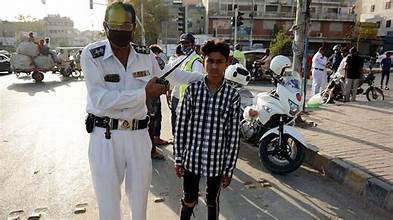
If implemented correctly, these reforms could make Karachi’s E-Challan system not just efficient but also citizen-friendly.
A Lesson for Digital Governance
The Karachi E-Challan controversy offers a valuable lesson for all digital systems in Pakistan: technology cannot replace accountability. Every automated process must be complemented by human verification, transparent appeal channels, and interlinked databases.
As more cities adopt smart surveillance and traffic automation, the government must ensure that such tools do not penalize innocent citizens due to data errors or bureaucratic inefficiencies.
Ahmed’s story, while unfortunate, might just serve as the wake-up call authorities need to refine the system for everyone’s benefit.
Conclusion
The E-Challan error involving a stolen motorcycle is not just an isolated incident—it’s a reflection of broader systemic flaws in Pakistan’s digital governance. While modernization promises efficiency, it must not come at the cost of fairness and accuracy.
Until the authorities address these underlying issues through better integration, transparency, and citizen-oriented reforms, more such stories will likely surface, eroding public trust in digital transformation initiatives.
Karachi’s residents hope that this case prompts meaningful action—because in the age of automation, justice must still have a human face.