by
by In a decisive move underscoring the government’s resolve to curb extremism and ensure public order, the Federal Cabinet has approved a nationwide ban on Tehreek-e-Labbaik Pakistan (TLP). The decision marks a significant moment in Pakistan’s internal security and political landscape, as the state takes a firm stance against a group that has often drawn controversy for its street protests, aggressive rhetoric, and confrontations with law enforcement agencies.
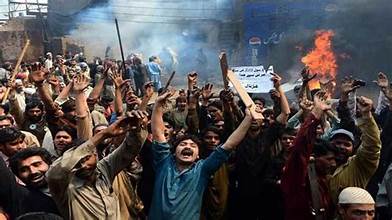
This announcement follows a series of violent demonstrations by TLP activists across the country, leading to loss of life, injuries to security personnel, and damage to public property. The government, faced with increasing pressure to maintain stability and safeguard citizens’ lives, has opted for a strict response aimed at preventing the recurrence of violent disruptions.
Background of Tehreek-e-Labbaik Pakistan (TLP)
Founded by the late Khadim Hussain Rizvi, Tehreek-e-Labbaik Pakistan rose to prominence in 2017 after organizing massive protests in Islamabad, triggered by amendments to the Election Act. The party’s central ideology revolved around defending Pakistan’s blasphemy laws and promoting an uncompromising religious narrative.
Over the years, TLP gained a considerable following, particularly among lower-middle-class urban populations and conservative segments of society. Its political rise was rapid; the party contested the 2018 general elections, securing notable support despite not winning significant seats. However, TLP’s reliance on street agitation as a political tool frequently brought it into conflict with the authorities.
Its protests often paralyzed major cities, obstructing transportation, trade, and daily life. These repeated disruptions, coupled with violence and inflammatory speeches, eventually led the government to take legal action under the Anti-Terrorism Act (ATA), branding TLP’s activities as a threat to national peace and security.
The Federal Cabinet’s Decision
The decision to impose the ban came after careful deliberation among cabinet members, intelligence officials, and law enforcement authorities. According to reports, the Ministry of Interior presented a summary to the cabinet, outlining TLP’s involvement in activities detrimental to public safety and national interest.
The proposal cited multiple instances of violent clashes between TLP protesters and police forces, leading to casualties on both sides. It also highlighted the group’s use of hate speech and incitement, which had the potential to destabilize communal harmony and fuel sectarian discord.
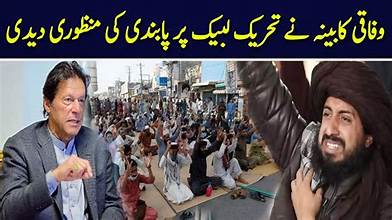
After reviewing the evidence, the Federal Cabinet unanimously approved the ban, formally designating TLP as a proscribed organization under the Anti-Terrorism Act. The decision empowers law enforcement agencies to freeze the group’s assets, shut down its offices, and detain individuals involved in activities on behalf of the organization.
Government’s Justification and Stance
The government has defended its move as a necessary measure to uphold the rule of law and protect citizens from extremist influences. Officials emphasized that freedom of expression and assembly must operate within constitutional boundaries and not jeopardize national peace.
According to the Interior Ministry, TLP repeatedly violated agreements with the state, using protests and sit-ins as pressure tactics to advance its demands. The latest wave of unrest reportedly involved attacks on police stations, torching of vehicles, and blockades of major highways, resulting in economic losses and severe public inconvenience.
Federal Information Minister stated that the ban is not against religion but against violence and anarchy. “No group or individual will be allowed to challenge the writ of the state or endanger lives under the guise of religious sentiment,” he asserted.
Public Reaction and Political Implications
The decision to ban TLP has triggered mixed reactions across the political spectrum and civil society. Supporters of the move view it as a long-overdue step toward reasserting state authority and countering the misuse of religion for political leverage. They argue that past leniency toward extremist outfits has emboldened them, leading to recurring cycles of unrest.
Conversely, critics caution that banning a group with a large following could backfire if not coupled with effective de-radicalization and engagement efforts. Some opposition parties have urged the government to address the root causes of extremism through education reform, community outreach, and stricter regulation of hate speech rather than relying solely on bans.
On the streets, many citizens have expressed relief at the government’s action, hoping it will bring an end to frequent disruptions and restore normalcy. However, others remain skeptical, citing previous instances where banned groups resurfaced under new names or operated covertly through social media and informal networks.
Legal Framework and Implementation
Under Pakistan’s Anti-Terrorism Act (ATA) 1997, the government has the authority to declare an organization as proscribed if it is found involved in terrorism, violence, or activities threatening public safety. Once notified, the organization’s bank accounts are frozen, funding sources blocked, and publications prohibited.
The Interior Ministry will now coordinate with provincial authorities to enforce the ban effectively. Intelligence agencies are expected to monitor TLP’s activities, track its leadership, and prevent the regrouping of its supporters under alternative banners. The government also plans to launch a crackdown on digital platforms spreading hate material or inciting violence in TLP’s name.
In addition, the Election Commission of Pakistan (ECP) may be directed to cancel TLP’s registration as a political party, thereby barring it from contesting elections or using official platforms for campaigning.
Impact on Society and Religious Politics
The ban on TLP has far-reaching implications for Pakistan’s political and social fabric. It sends a clear message that the state will no longer tolerate the weaponization of religion for political gains or street power.
However, it also raises questions about how the government will handle the broader challenge of religious extremism, which has deep roots in socio-economic disparities, lack of education, and sectarian narratives. Experts argue that while the ban may provide temporary relief, sustainable peace requires a comprehensive counter-extremism strategy involving education, media literacy, and interfaith dialogue.
Religious politics has long been a delicate issue in Pakistan. TLP’s emergence reflected a growing frustration among sections of society who feel alienated from mainstream politics. Addressing their grievances—without legitimizing violence—will be crucial in preventing future radicalization.
Challenges Ahead
Enforcing the ban on a group with a strong street presence poses logistical and political challenges. There are concerns that underground networks might continue mobilizing sympathizers through social media and informal gatherings. Moreover, maintaining the delicate balance between security measures and protection of civil liberties will be critical for the government’s credibility.
Another challenge lies in ensuring that enforcement does not turn into persecution of religious communities at large. The government must communicate clearly that the ban targets unlawful conduct, not religious belief.
Analysts also warn of potential retaliation or renewed protests by hardcore elements of TLP, emphasizing the need for proactive law enforcement and intelligence coordination.
Conclusion
The Federal Cabinet’s approval of a nationwide ban on Tehreek-e-Labbaik Pakistan represents a defining moment in the state’s ongoing effort to reassert its authority over extremist politics. It highlights a growing recognition that no organization—regardless of its religious or political appeal—can be allowed to hold the nation hostage through violence or intimidation.
For lasting peace, however, the government must complement this action with a multi-dimensional approach—strengthening education, regulating hate speech, promoting tolerance, and ensuring that marginalized voices find peaceful avenues for expression. Only then can Pakistan hope to move toward a future where faith and politics coexist within the boundaries of law and mutual respect.