
 by
by Introduction
In a significant development that underscores Pakistan’s unrelenting resolve to defend its borders and preserve internal stability, the Pakistan Army successfully foiled an infiltration attempt along the western border, neutralizing several militants associated with the India-backed group “Fitna Al Khawarij.” According to an official statement issued by the Inter-Services Public Relations (ISPR), the operation was part of the army’s continuous counterterrorism efforts aimed at eradicating elements seeking to destabilize the country through foreign-backed subversion.
The recent clash, which took place near the Pakistan-Afghanistan border, not only highlighted the army’s vigilance and operational readiness but also exposed the ongoing attempts by hostile intelligence networks to reignite terrorism in the region through proxy outfits. The name “Fitna Al Khawarij” itself evokes strong historical and ideological connotations, representing a faction attempting to distort religion for violent and political objectives — a tactic Pakistan’s security forces have long been fighting to dismantle.
The Operation in Detail
According to ISPR, the infiltration attempt occurred late at night when a group of heavily armed militants tried to cross into Pakistani territory under the cover of darkness. The security forces, acting on precise intelligence, swiftly launched a counter-operation to intercept the intruders. A fierce gun battle ensued, resulting in the elimination of multiple terrorists who were later identified as members of the proscribed group “Fitna Al Khawarij.”
The ISPR’s statement emphasized that the militants were equipped with advanced weapons and communication systems — evidence of external support and coordination. The army recovered significant caches of arms, ammunition, and explosive material from the site, indicating the group’s intent to carry out large-scale terrorist attacks within Pakistan.
Importantly, no loss of civilian life was reported, as the operation was executed with surgical precision. However, a few Pakistani soldiers sustained injuries during the exchange of fire, reflecting the continued sacrifices made by the armed forces in safeguarding national peace and sovereignty.
The Role of “Fitna Al Khawarij”
“Fitna Al Khawarij” has been identified by Pakistani intelligence agencies as a dangerous offshoot of extremist networks that operate with ideological distortions of religion to justify violence. The group’s name itself draws from historical roots — “Khawarij” being a term associated with rebels who deviated from mainstream Islamic thought, promoting chaos and bloodshed under the guise of faith.
ISPR’s statement revealed that this particular faction had received backing and training from Indian intelligence agencies, serving as a proxy to disrupt Pakistan’s internal security environment. Over the past few years, Pakistan has repeatedly raised concerns about India’s involvement in financing, training, and arming terrorist groups operating near its borders. The infiltration attempt by “Fitna Al Khawarij” adds another chapter to these allegations, highlighting the use of hybrid warfare tactics aimed at weakening Pakistan’s social and security fabric.
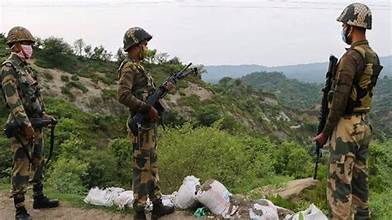
India’s Role and Regional Implications
The revelation of Indian backing behind “Fitna Al Khawarij” once again brings to the forefront the persistent tensions between Islamabad and New Delhi. While both nations have had a long and complex history marked by conflicts and diplomatic disputes, Pakistan has consistently accused India of sponsoring terrorism on its soil. Evidence provided by Pakistani intelligence in the past — including the confessions of captured spies and militants — suggests a pattern of covert Indian operations aimed at creating unrest, particularly in Balochistan and the tribal regions.
The infiltration attempt is a direct challenge not only to Pakistan’s territorial integrity but also to regional peace. By supporting militant proxies, India risks destabilizing South Asia, a region already facing the repercussions of terrorism, economic challenges, and cross-border disputes.
The ISPR reiterated Pakistan’s stance that such attempts will be met with a “firm and decisive response,” and warned that any foreign hand involved in destabilizing the country will be exposed at the international level. This aligns with Pakistan’s broader diplomatic efforts to highlight India’s interference in forums such as the United Nations and the Shanghai Cooperation Organisation (SCO).
Pakistan Army’s Counterterrorism Commitment
The successful operation serves as yet another testament to the Pakistan Army’s relentless counterterrorism campaign under the broader framework of Operation Radd-ul-Fasaad and Operation Zarb-e-Azb. Over the last decade, Pakistan’s armed forces have achieved remarkable success in dismantling terrorist networks, restoring law and order in areas once considered insurgent strongholds, and rebuilding the state’s writ.
Despite facing repeated attempts by foreign-sponsored groups to reignite violence, the Pakistan Army continues to evolve its strategy through a mix of intelligence-driven operations, surveillance technologies, and regional cooperation with neighboring countries. The emphasis remains on eliminating not just active militants but also their facilitators, handlers, and financiers.
ISPR’s recent statement reaffirmed that Pakistan’s soil will never again be used as a safe haven for terrorism. The army’s coordination with civil intelligence agencies ensures that threats are identified before they materialize, while the Armed Forces’ modernized counterterrorism capabilities enable swift and effective responses to cross-border incursions.
The Broader Context: Hybrid Warfare and Disinformation
The infiltration incident cannot be viewed in isolation. It fits within the larger pattern of hybrid warfare — a modern strategy that blends conventional military aggression with disinformation, cyber-attacks, economic sabotage, and proxy terrorism. Pakistan has repeatedly accused its adversaries of employing these tactics to weaken its internal cohesion and international image.
By using ideological extremist groups such as “Fitna Al Khawarij,” hostile states aim to exploit religious sentiments and social divides. These groups are not only trained for physical attacks but are also equipped to spread propaganda online, attempting to polarize society and erode trust in state institutions.
Pakistan’s government and security agencies have been actively countering such hybrid threats through coordinated media awareness campaigns, cyber defense units, and community engagement programs. ISPR has played a crucial role in exposing fake narratives and highlighting the sacrifices of soldiers who fight these unseen battles daily.

National Resilience and Public Support
The Pakistani nation’s resilience against terrorism has been remarkable. Over the past two decades, Pakistan has endured some of the most devastating terrorist attacks, yet each tragedy has only strengthened its collective resolve. The people’s unwavering trust in the Pakistan Army has been a cornerstone of the country’s fight against extremism.
Following the ISPR’s announcement of the latest operation, social media platforms were flooded with messages of solidarity, gratitude, and national pride. Citizens, politicians, and analysts praised the armed forces for their bravery and vigilance in thwarting threats before they could cause civilian harm.
This unity between the public and the security institutions represents Pakistan’s strongest defense against foreign interference. The “Fitna Al Khawarij” infiltration attempt, instead of instilling fear, has reinforced the spirit of resistance and patriotism across the country.
The Way Forward
While the successful operation marks another victory in Pakistan’s ongoing war against terrorism, it also serves as a reminder of the continuous challenges posed by foreign-backed groups. To sustain long-term peace, Pakistan must maintain a holistic approach — combining military strength with intelligence cooperation, border management, and socioeconomic development in vulnerable regions.
Regional stability requires mutual respect for sovereignty and non-interference. Pakistan’s leadership has repeatedly emphasized dialogue and peaceful coexistence, but it has also made it clear that any aggression — direct or indirect — will be met with forceful resistance.
At the same time, greater collaboration with Afghanistan’s authorities is essential to ensure that border areas are not exploited by militant networks. Strengthening surveillance infrastructure, enhancing community policing, and continuing rehabilitation programs for affected areas will further consolidate national security gains.
Conclusion
The Pakistan Army’s successful operation against India-backed “Fitna Al Khawarij” militants is a defining moment in the nation’s ongoing struggle against terrorism and foreign interference. It highlights not only the operational excellence of the armed forces but also the resilience of a nation that refuses to bow before aggression or chaos.
This episode reinforces a timeless truth: Pakistan’s strength lies in unity, vigilance, and faith. As long as its defenders remain alert and its citizens remain steadfast, no force — foreign or domestic — can undermine its sovereignty or peace.
Through unwavering commitment, sacrifice, and strategic clarity, the Pakistan Army continues to uphold its promise of ensuring that every inch of the country remains safe from the enemies of peace. The elimination of “Fitna Al Khawarij” is not merely a tactical victory — it is a symbolic blow against those who seek to weaponize ideology for destruction.