 by
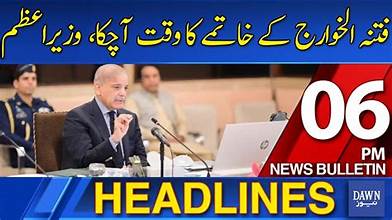
by In a resolute and impassioned declaration, Prime Minister Shehbaz Sharif announced that Pakistan will launch an “all-out war” against terrorism, signaling a new phase in the nation’s fight to protect its citizens and ensure lasting peace. With the words “Enough is enough,” the Prime Minister drew a line in the sand, warning militant groups that Pakistan will no longer tolerate violence, extremism, or threats to its national security. His announcement marks a decisive shift in policy, combining military operations, intelligence coordination, and socio-political reforms to eradicate terrorism from its roots.
A Renewed Resolve Against Terrorism
Prime Minister Shehbaz’s announcement came amid a surge in terrorist incidents across various regions of the country, particularly in Khyber Pakhtunkhwa and Balochistan. The recent wave of attacks targeting security forces and civilians alike has reignited concerns about the resurgence of militant networks that Pakistan had previously dismantled through major operations like Zarb-e-Azb, Radd-ul-Fasaad, and Rah-e-Nijat.
In his address, PM Shehbaz declared that the government would take “decisive and comprehensive action” against all terrorist organizations, regardless of their affiliations or geographic presence. “We will not allow these elements to sabotage our peace, hinder our progress, or hold our citizens hostage through fear,” he asserted. His tone reflected both frustration and determination, as he emphasized that Pakistan’s sacrifices in the war on terror must not be in vain.
The Context: A Nation Tested by Decades of Conflict
Pakistan’s battle against terrorism has been one of the most prolonged and costly struggles in the region. Since the early 2000s, the country has faced devastating waves of militancy that have claimed tens of thousands of lives and inflicted severe economic losses. Despite multiple military operations that dismantled terrorist infrastructure in tribal regions, the problem has persisted in different forms, adapting to new geopolitical realities.
Over the past year, there has been a noticeable increase in cross-border attacks and insurgent activities. Intelligence reports suggest that remnants of militant networks have attempted to regroup, exploiting instability in neighboring Afghanistan. PM Shehbaz’s declaration therefore comes at a critical juncture — not merely as a reactionary statement, but as a strategic call for unity and renewed commitment across institutions.
Operation-Level Strategy and Military Readiness
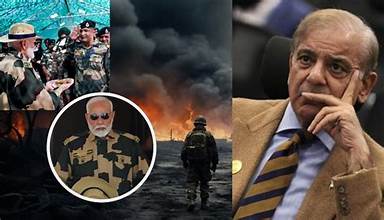
Following the Prime Minister’s statement, reports from security circles indicate that the National Counter Terrorism Authority (NACTA) and military leadership have been directed to devise a fresh and synchronized action plan. Unlike previous operations that were largely military in nature, the upcoming campaign will reportedly adopt a “whole-of-nation approach” — integrating the efforts of intelligence agencies, provincial governments, and civilian institutions Enough Is Enough.
According to insiders, the government aims to strengthen border security, enhance coordination between civil and military agencies, and improve intelligence-sharing mechanisms to prevent infiltration and sabotage. PM Shehbaz has also emphasized the importance of political consensus, urging all parties to set aside differences for the sake of national security.
Economic Stability and Security: Two Sides of the Same Coin
Terrorism has not only taken lives but has also deeply affected Pakistan’s economic fabric. The uncertainty created by militant violence has often discouraged foreign investment, damaged tourism, and strained the country’s fiscal resources. Prime Minister Shehbaz pointed out that “Enough Is Enough economic revival is impossible without internal stability.”
To support this vision, the government is expected to allocate additional funds for counterterrorism initiatives, border fencing, and security infrastructure. In addition, economic reforms aimed at creating employment opportunities in vulnerable regions will be introduced, with the goal of cutting off the recruitment channels exploited by extremist groups.
The Prime Minister’s message is clear — peace and progress are interlinked, and Pakistan’s future prosperity depends on eliminating terrorism once and for all.
The Role of Political and Religious Leaders
One notable aspect of PM Shehbaz’s address was his call for unity across the political and ideological spectrum. He urged religious scholars, community leaders, and political parties to collectively denounce terrorism and play an active role in countering extremist narratives Enough Is Enough.
“The fight against terrorism is not just fought on battlefields; it begins in our mosques, classrooms, and media spaces,” the Prime Minister remarked. He highlighted the need for social reform and education to combat the ideological roots of extremism.
Religious leaders have a pivotal role in promoting tolerance and countering misinterpretations of faith used by terrorists to justify their acts. PM Shehbaz also underscored the importance of modern education and awareness campaigns to empower youth and prevent radicalization.
Regional Cooperation and International Support
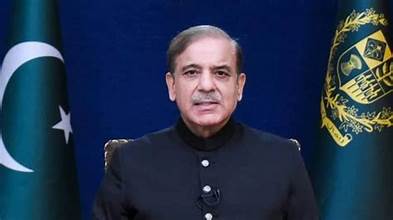
Pakistan’s renewed counterterrorism strategy is also expected to involve diplomatic engagement with neighboring countries. PM Shehbaz reaffirmed Pakistan’s commitment to maintaining strong ties with Afghanistan, Iran, and China to ensure that cross-border terrorism is effectively curbed.
He also called upon the international community to recognize Pakistan’s sacrifices in the global war on terror and to cooperate in intelligence sharing and financial tracking of terrorist networks. The government intends to strengthen collaboration with organizations like the Financial Action Task Force (FATF) to ensure that militant groups are deprived of financial resources.
Public Response and National Sentiment
The Prime Minister’s strong stance has sparked widespread discussion among citizens, analysts, and political commentators. Many Pakistanis view the declaration as a much-needed step after years of reactive policies and fragmented responses Enough Is Enough.
Social media platforms have been flooded with messages of support, with hashtags like #WarOnTerror, #EnoughIsEnough, and #StandWithPakistan trending nationwide. However, there are also calls for transparency and accountability, emphasizing that past counterterrorism operations should not be repeated without addressing the root causes of extremism — such as unemployment, poor governance, and lack of education.
Public opinion suggests that the people are ready to support the government, but they expect results and consistency rather than symbolic announcements.
Challenges Ahead
Despite the renewed determination, Pakistan’s war on terror remains fraught with challenges. The country’s porous borders, complex tribal dynamics, and external influences make counterterrorism a multifaceted struggle Enough Is Enough.
Moreover, balancing security imperatives with human rights and civil liberties will require careful policy planning. Civilian casualties and displacement during past operations have left scars that must be addressed through rehabilitation and reconstruction programs.
Experts argue that success will depend on the government’s ability to sustain momentum, ensure institutional coordination, and build trust among citizens who have long suffered from the consequences of militancy.
Conclusion: A Defining Moment for Pakistan
Prime Minister Shehbaz Sharif’s declaration of an “all-out war on terror” represents not just a policy shift but a defining moment in Pakistan’s history. It symbolizes the nation’s collective exhaustion with decades of violence and its readiness to move forward with strength, unity, and resolve.
If implemented with transparency, coordination, and compassion, this initiative could pave the way for a peaceful and prosperous Pakistan — one where security is not a privilege but a right for every citizen Enough Is Enough.
The words “Enough is enough” echo far beyond the political stage; they reflect the sentiment of a nation determined to reclaim its peace and destiny.