 by
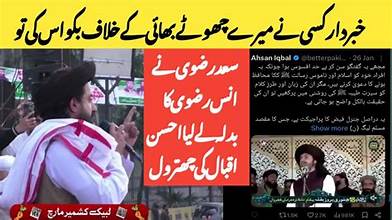
by In a dramatic escalation of political tension, Punjab Information Minister Azma Bukhari has accused Tehreek-e-Labbaik Pakistan (TLP) chief Saad Hussain Rizvi of using human shields to evade arrest amid an ongoing government crackdown on the banned organization’s leadership. The accusation has sparked intense debate across political, legal, and social circles, highlighting once again the volatile relationship between the state and the hardline religious party that has frequently challenged the government’s authority through mass street power.
According to Bukhari, law enforcement agencies attempting to apprehend Rizvi have faced fierce resistance from groups of supporters, including women and children, allegedly being used as protective barriers to prevent police entry. These claims, if substantiated, raise serious ethical and legal concerns regarding the tactics being employed by TLP’s leadership during heightened tensions between the government and the group.
Background: TLP’s Contentious History
Tehreek-e-Labbaik Pakistan (TLP) has been at the center of numerous confrontations with the state over the past decade. Founded by the late Khadim Hussain Rizvi, the movement emerged from the blasphemy law protests of 2017, when sit-ins and demonstrations in Islamabad brought the capital to a standstill. The party built its support base around a strong religious sentiment, positioning itself as the self-proclaimed defender of Pakistan’s religious laws.
Under the leadership of Saad Rizvi, who succeeded his father after his death in 2020, the organization has maintained a pattern of street protests, road blockades, and confrontations with security forces. While the group’s rhetoric resonates with a large segment of the religious population, its methods have often drawn condemnation for causing public disruption, violence, and economic losses.
TLP’s relationship with the state has fluctuated between confrontation and negotiation. Governments have, at various points, banned the organization, detained its leaders, or reached temporary truces to diffuse unrest. However, the latest accusations by Azma Bukhari suggest that tensions are once again approaching a critical point.
Azma Bukhari’s Allegations
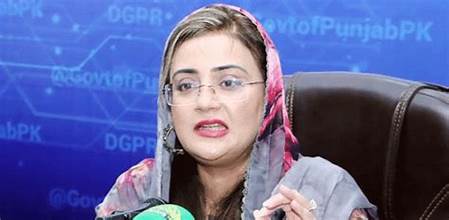
During a press conference in Lahore, Azma Bukhari accused Saad Rizvi of deliberately using his followers as a human shield to obstruct law enforcement from carrying out legal proceedings. “It is shameful and deeply irresponsible for any leader to endanger his own people—especially women and children—just to protect himself from arrest,” she stated.
According to Bukhari, intelligence reports indicate that Rizvi has been surrounded by groups of TLP activists who have gathered near his residence and party offices, forming a human barricade to block police action. She claimed that despite multiple warnings from authorities, the group continues to mobilize supporters under the pretext of religious defense.
The minister also emphasized that the government’s actions are strictly within legal boundaries. “This is not a political victimization. This is about maintaining law and order. No one is above the law—not even those who misuse religion to escape accountability,” she added.
TLP’s Response
In response, TLP spokespersons have denied the allegations, calling them “baseless propaganda” aimed at discrediting the movement. They claim that the people gathering around Saad Rizvi’s residence are volunteers and supporters who have come of their own will to express solidarity and to protest what they describe as “state oppression.”
TLP maintains that its leader is being unfairly targeted for his political stance and religious activism. “Saad Rizvi is not hiding behind anyone,” a party statement read. “It is the people who stand with him, not because they are being used, but because they believe in his cause.”
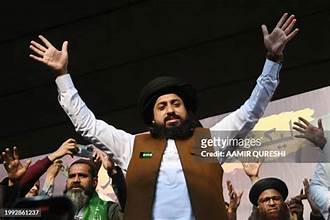
However, footage circulating on social media shows large crowds—many of whom appear to be unarmed civilians—surrounding key TLP locations, chanting slogans, and vowing to resist any attempt at arrest. These images have fueled public concern about potential violence if authorities decide to move in.
Government’s Perspective: Ensuring Law and Order
The government’s stance has been consistent: it claims that the recent operation against TLP leaders is part of an ongoing campaign to curb extremism and restore law and order. Interior Ministry sources suggest that the crackdown is aimed at preventing another wave of violent protests similar to those seen in the past, which resulted in casualties, damage to public property, and widespread chaos.
Authorities argue that Saad Rizvi’s actions—allegedly using civilians as protective barriers—represent a dangerous tactic that could escalate tensions further. Officials warn that any attempt to use non-combatants to deter law enforcement constitutes a violation of both domestic and international laws related to human rights and criminal accountability.
Azma Bukhari reiterated that the state would act with restraint but firmness. “We will not allow any individual or group to hold the country hostage through intimidation or manipulation. The writ of the state will be upheld,” she said.
Legal Implications: Human Shields and Accountability
If proven, the use of human shields is a serious offense under international humanitarian law. It is typically defined as the deliberate use of civilians to deter attacks on combatants or military objectives. While this terminology is more commonly applied in conflict zones, the underlying principle—endangering civilians for personal protection—remains legally and morally indefensible.
Legal experts in Pakistan have noted that the Anti-Terrorism Act (ATA) and Pakistan Penal Code (PPC) include provisions against such tactics, classifying them as acts that endanger public safety and obstruct justice. Moreover, the state can prosecute individuals who incite or mobilize others to resist lawful arrest through violence or coercion.
Senior legal analyst Barrister Usman Ahmad commented, “If the government can provide concrete evidence that civilians were coerced or manipulated into forming a protective barrier, the courts could view this as obstruction of justice and endangerment of life. It could have serious legal repercussions for the leadership.”
Public Reaction and Political Fallout
The accusations have sparked a divided reaction within Pakistan’s political landscape. Supporters of the ruling coalition have backed Azma Bukhari’s statement, calling it a necessary exposure of TLP’s manipulative strategies. They argue that religious leaders must not be allowed to use faith as a shield against the law.
Conversely, critics accuse the government of using heavy-handed tactics and inflammatory rhetoric to suppress dissent. Opposition parties, while refraining from directly supporting TLP, have questioned the timing and motivation behind the government’s renewed aggression toward the group.
Public opinion also remains polarized. While many citizens express frustration at TLP’s disruptive protests, others sympathize with the movement’s religious sentiments, viewing it as a voice for protecting Pakistan’s Islamic identity. The controversy has reignited debates over the balance between freedom of expression, religious sentiment, and the rule of law.
The Role of Media and Social Platforms
Social media has played a crucial role in amplifying both narratives. Supporters of Azma Bukhari have shared footage showing large crowds surrounding TLP offices, arguing that such gatherings prove the existence of “human shields.” Meanwhile, TLP-affiliated accounts have circulated counter-narratives, claiming that the people present are volunteers standing peacefully in defense of their leader.
This digital tug-of-war underscores the growing challenge of information warfare in Pakistan’s political discourse. In the age of social media, unverified footage and manipulated narratives can inflame tensions faster than official statements can contain them.
The government has warned media outlets and online platforms to avoid spreading misinformation or content that could incite violence. The Pakistan Electronic Media Regulatory Authority (PEMRA) has reportedly increased monitoring of coverage related to TLP activities.
A Pattern of Confrontation
Saad Rizvi’s leadership has been marked by repeated confrontations with the state. Since taking over TLP’s reins, he has led multiple nationwide protests—often sparked by issues linked to blasphemy or foreign policy decisions. Each time, the government has struggled to balance enforcement with negotiation, wary of the potential backlash that could follow any violent clash.
Observers note that Rizvi’s strategy of mobilizing mass support and leveraging religious sentiment has effectively turned him into a powerful populist figure, one who commands both fear and reverence. However, critics argue that such tactics exploit faith for political gain, undermining social cohesion and state authority.
The current standoff, centered around Bukhari’s allegations, reflects the recurring cycle of confrontation between Pakistan’s state institutions and religious hardliners—a cycle that continues to test the country’s political maturity and institutional strength.
Conclusion: A Test for State Authority
The allegation that Saad Rizvi is using human shields to avoid arrest represents more than just a political controversy—it symbolizes the enduring struggle between the rule of law and the politics of religious populism in Pakistan.
If the claims by Azma Bukhari are verified, they expose not only a moral failing but also a dangerous precedent where civilian lives are manipulated for political protection. Conversely, if proven false, they would highlight the government’s tendency to use rhetoric as a weapon in its conflict with dissenting groups.
Either way, the situation calls for transparency, accountability, and restraint from all sides. The government must uphold justice through lawful means, ensuring that enforcement actions do not infringe upon citizens’ rights. Likewise, religious movements must recognize that no ideology—however sacred—grants impunity from legal responsibility.
As Pakistan continues to navigate its complex intersection of religion, politics, and governance, this episode serves as a stark reminder: the strength of a nation lies not in how loudly its leaders shout, but in how steadfastly it defends the principles of justice and humanity.


