 by
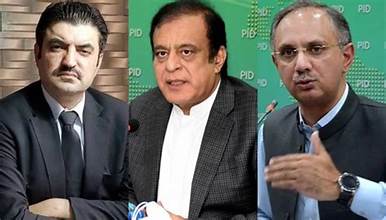
by The political temperature in Pakistan has once again surged as the Supreme Court (SC) formally constituted a bench to hear the appeals of senior Pakistan Tehreek-e-Insaf (PTI) leaders Omar Ayub Khan and Shibli Faraz against their disqualification. The development marks a crucial moment in Pakistan’s ongoing political and legal battles, as both leaders remain at the forefront of the PTI’s struggle for political survival following a series of disqualifications, arrests, and legal confrontations.
The Supreme Court’s decision to take up these appeals is seen as a pivotal step toward clarifying the legal standing of the PTI’s top leadership and determining whether due process was followed in their earlier disqualification rulings. For many observers, the case is not just about two political figures—it’s a test of judicial independence, constitutional interpretation, and the balance of power between institutions in Pakistan’s evolving democracy.
Background: The Road to Disqualification
Omar Ayub Khan, currently serving as the Secretary General of PTI, and Senator Shibli Faraz, a key voice of the party in the Senate, were disqualified under charges that stemmed from alleged violations of election laws and procedural irregularities. The Election Commission of Pakistan (ECP) had moved against both leaders in the aftermath of heightened political tensions following the disqualification of several PTI members after the May 2023 unrest and subsequent political crackdown.
The ECP’s decision to disqualify them was based on accusations of non-compliance with disclosure requirements and allegations of facilitating activities that were deemed “unconstitutional” or “against the spirit of democratic norms.” However, both leaders rejected the allegations outright, calling them politically motivated and part of a broader effort to sideline the PTI from Pakistan’s political landscape.
Their petitions before the Supreme Court argue that their fundamental rights under the Constitution—particularly the right to fair trial and due process—were violated. They maintain that the disqualification process lacked transparency, was rushed, and did not give them adequate opportunity to defend themselves.
Formation of the Supreme Court Bench
The Supreme Court, under the leadership of Chief Justice Qazi Faez Isa, has now constituted a three-member bench to hear the appeals of Omar Ayub and Shibli Faraz. The bench reportedly includes senior justices known for their expertise in constitutional and electoral matters, ensuring that the case receives thorough judicial scrutiny.
Supreme Court Legal analysts view the formation of this bench as an important gesture of judicial balance and procedural fairness. It signals the Court’s recognition of the sensitivity surrounding political disqualifications, which have historically played a major role in shaping Pakistan’s political trajectory.
The date for the initial hearing has been set for the coming week, during which the Court will likely review the ECP’s decision-making process, the legality of the disqualification orders, and whether procedural fairness was maintained throughout the proceedings.
The Political Context
The timing of the Supreme Court’s intervention could not be more significant. Pakistan’s political climate remains polarized, with PTI leaders facing multiple legal challenges, including criminal cases, disqualifications, and restrictions on political activities.
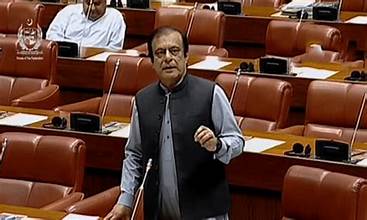
Omar Ayub, who has emerged as one of the most prominent voices within PTI after the incarceration of several senior figures, has consistently maintained that the cases against him and other PTI leaders are part of a deliberate campaign to dismantle the party’s political base. Similarly, Shibli Faraz—known for his articulate defense of PTI’s policies in Parliament—has described his disqualification as an “attack on democracy.”
For the PTI, the upcoming hearings represent an opportunity to reclaim some political legitimacy and demonstrate that the judiciary can serve as a neutral arbiter in times of institutional friction. Conversely, for the government and the ECP, the hearings will be a test of whether their actions can withstand constitutional scrutiny.
Judicial Independence and Political Accountability
Pakistan’s judiciary has often found itself in the center of political storms, and the current scenario is no different. The Supreme Court’s decision to entertain the appeals reflects its commitment to ensuring due process and equal treatment under the law.
However, this case also reignites long-standing debates about the relationship between the judiciary and politics. Historically, judicial decisions in politically charged cases have had far-reaching consequences—from disqualifying prime ministers to dissolving parliaments. In such a context, the Court’s handling of the Omar Ayub and Shibli Faraz cases could influence how future political disqualifications are viewed and contested.
Analysts suggest that this hearing could serve as a precedent-setting case, determining how much power the ECP holds in unilaterally disqualifying elected representatives without exhaustive judicial review.
PTI’s Broader Legal Strategy
PTI has increasingly turned to the judiciary as a primary avenue for political survival and rehabilitation. With its top leadership facing arrests and restrictions, the party views the courts as the last institution capable of ensuring fair play.
Omar Ayub, who is also a potential candidate for future party leadership roles, has maintained that the PTI will continue to use legal means to challenge what it calls “unjust and politically motivated actions.” Shibli Faraz has echoed similar sentiments, emphasizing that the PTI’s struggle is not just for individual justice but for safeguarding democratic norms.
Party insiders have expressed cautious optimism following the Supreme Court’s decision to form a bench, seeing it as a potential turning point in their broader legal campaign.

Possible Outcomes and Their Implications
The Supreme Court’s ruling—whenever it arrives—will carry substantial implications for Pakistan’s political landscape.
- If the Supreme Court overturns the disqualifications, it would be a significant moral and political victory for PTI, potentially allowing its leaders to reclaim their parliamentary positions and rejuvenate the party’s political standing. It could also embolden other disqualified members to seek similar relief through the judiciary.
- If the Supreme Court upholds the disqualifications, the decision would reinforce the ECP’s authority and send a strong message that electoral and ethical violations will not be tolerated. However, such an outcome could deepen PTI’s sense of victimization and further polarize national politics.
Either way, the verdict is expected to set an important precedent regarding the boundaries of the ECP’s powers, the sanctity of elected office, and the judiciary’s role in safeguarding democratic rights.
Public and Media Reactions
The announcement of the bench has sparked widespread discussion across political circles and the media. Supporters of PTI view the move as a step toward justice, while critics argue that the party has frequently attempted to use the courts to evade political accountability.
Civil society groups and legal experts have called for the proceedings to be conducted transparently and free from external pressure. Many emphasize that such cases should not be reduced to partisan battles but treated as constitutional questions of fairness, due process, and electoral integrity.
Television panels, social media discussions, and newspaper editorials are already debating whether the judiciary can maintain impartiality amid intense political polarization. The case has become a symbol of the broader struggle for rule of law and institutional independence in Pakistan.
The Broader Democratic Picture
Pakistan’s democracy has long grappled with tensions between its institutions—executive, legislature, and judiciary. The current episode involving Omar Ayub and Shibli Faraz underscores the fragility of that balance. It also demonstrates that democratic accountability cannot be selective; both politicians and institutions must be held to the same standards of transparency and justice.
The Supreme Court’s handling of this case could set the tone for how Pakistan navigates future conflicts between political power and legal authority. If the judiciary succeeds in ensuring a fair and transparent process, it could strengthen public confidence in the legal system and reaffirm its role as the guardian of constitutional rights.
Conclusion
The Supreme Court’s decision to form a bench to hear the appeals of Omar Ayub Khan and Shibli Faraz against their disqualification has opened a new chapter in Pakistan’s complex political and judicial narrative. Beyond the legal intricacies, the case encapsulates the ongoing struggle for legitimacy, accountability, and democratic continuity.
As the hearings proceed, all eyes will be on the Supreme Court—an institution once again tasked with delivering justice amid political turbulence. Whether this moment leads to renewed trust in Pakistan’s institutions or deepens its divisions will depend on the transparency, integrity, and courage with which the judiciary proceeds.
Ultimately, the pursuit of justice for Omar Ayub and Shibli Faraz is not merely about two politicians; it is a test of the nation’s democratic maturity and the resilience of its constitutional order.