 by
by In yet another headline-grabbing controversy, former U.S. President Donald Trump has sparked outrage after calling Jewish supporters of New York State Assemblyman Zohran Mamdani “stupid.” The remark, which has been widely condemned across political and religious circles, reignited debates about antisemitism, political polarization, and Trump’s ongoing influence over American conservative politics.
This statement is not only politically charged but also touches a sensitive chord in a country where identity, religion, and politics often intersect. As the 2024 U.S. elections continue to shape the national discourse, Trump’s comment underscores the ongoing tensions between progressive lawmakers like Mamdani and Trump’s conservative base, particularly around issues involving Israel and U.S. foreign policy in the Middle East.
The Controversial Statement
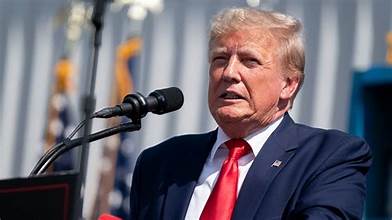
During a recent public event and later on his Truth Social platform, Trump criticized Jewish Americans who support left-leaning politicians, specifically targeting those backing Zohran Mamdani, a progressive Democratic lawmaker from Queens, New York. Mamdani, known for his vocal stance on Palestinian rights and criticism of Israel’s policies, has been a lightning rod for both support and opposition.
In his comments, Trump reportedly said:
“Any Jew that supports people like Zohran Mamdani is stupid — they don’t understand what’s going on. They’re turning against their own people.”
This blunt and inflammatory remark immediately drew attention, with political figures, Jewish organizations, and civil rights groups denouncing Trump’s language as divisive and discriminatory. Critics argue that Trump’s statement not only disrespects Jewish Americans’ right to political diversity but also perpetuates harmful stereotypes about loyalty and identity.
Who Is Zohran Mamdani?
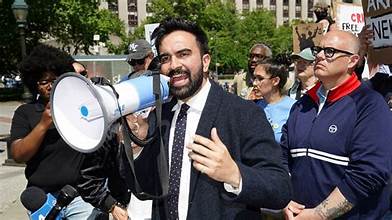
To understand the gravity of Trump’s comments, it’s important to recognize who Zohran Mamdani is and what he represents in American politics. Mamdani, a Democratic Socialist of Ugandan-Indian descent, represents New York’s 36th Assembly District, which includes parts of Astoria in Queens. Since taking office, he has been an outspoken advocate for housing justice, workers’ rights, and the Palestinian cause.
Mamdani’s political views have made him both a symbol of progressive activism and a target of right-wing criticism. He is among a growing number of younger Democratic politicians who have been vocal about U.S. foreign policy toward Israel, advocating for Palestinian self-determination and calling for a reassessment of America’s unconditional military aid to Israel.
Trump’s attack on Mamdani’s Jewish supporters is, therefore, seen by many as an extension of the former president’s hardline pro-Israel stance and his disdain for the progressive wing of the Democratic Party, which has grown increasingly critical of Israel’s government.
Political Context: Trump’s History with Jewish Voters
Trump’s relationship with the Jewish community has always been complex and controversial. While he has repeatedly touted his strong alliance with Israel — highlighted by his 2018 decision to move the U.S. Embassy to Jerusalem — he has also faced backlash for remarks that many interpret as antisemitic or stereotypical.
In previous statements, Trump has suggested that Jewish Americans who vote for Democrats are “disloyal” to Israel, implying that their loyalty should be tied to the Jewish state rather than the United States.
In 2019, for example, he said:
“I think any Jewish people that vote for a Democrat — I think it shows either a total lack of knowledge or great disloyalty.”
These remarks were widely condemned, including by the American Jewish Committee and the Anti-Defamation League (ADL), which accused Trump of weaponizing identity and undermining the idea that Jewish Americans are diverse in their political beliefs.
The latest comment about Mamdani’s Jewish supporters, critics argue, follows the same troubling pattern.
Reaction from Jewish and Political Leaders
The backlash to Trump’s comments was swift and wide-ranging. Prominent Jewish leaders and advocacy organizations criticized the former president for what they described as “irresponsible and inflammatory rhetoric.”
Jonathan Greenblatt, CEO of the Anti-Defamation League, condemned Trump’s remarks, saying:
“Labeling Jewish Americans as ‘stupid’ for exercising their democratic right to support the candidate of their choice is offensive and dangerous. This kind of rhetoric fuels division and antisemitic tropes.”
Progressive Jewish organizations, including Jewish Voice for Peace and IfNotNow, also spoke out, defending Mamdani’s supporters and rejecting Trump’s framing of Jewish loyalty.
“Being Jewish does not mean one must support Israel’s government or align with Trump’s worldview,” one statement read. “To suggest otherwise is to erase the diversity of Jewish thought and moral conscience.”
Mamdani himself responded firmly to Trump’s comments. In a post on X (formerly Twitter), he wrote:
“Trump’s attacks on my supporters reveal the same tired tactic — using fear and division to silence people who dare to stand for justice. My Jewish constituents are among the most principled voices in our community, and no insult will change that.”
Democratic leaders, including New York Governor Kathy Hochul and Senator Chuck Schumer, condemned the remarks as “disrespectful and reckless,” arguing that Trump’s comments once again highlight his willingness to use religion as a political weapon.
A Deeper Issue: Weaponizing Religion in Politics
Trump’s comments reflect a broader issue that has haunted American politics for decades — the weaponization of religion for political gain. By framing political loyalty through religious or ethnic identity, leaders risk deepening societal divides.
In Trump’s case, his repeated invocation of Israel and Jewish identity has often been a strategic appeal to evangelical and conservative voters, who view strong U.S.-Israel ties as a cornerstone of their worldview.
However, his remarks alienate Jewish Americans who prioritize social justice, equality, and pluralism — values often associated with the progressive movement. By calling them “stupid,” Trump not only insulted individuals but also dismissed an entire spectrum of legitimate political thought within the Jewish community.
Political analysts note that such comments may galvanize Trump’s base but erode his appeal among moderate voters ahead of the 2024 elections.
The Progressive Response and Solidarity
Trump’s comment inadvertently strengthened solidarity between progressive Jewish groups and pro-Palestinian activists, both of whom view his language as an attempt to suppress political diversity and moral debate.
Zohran Mamdani, along with other progressive lawmakers such as Alexandria Ocasio-Cortez, Ilhan Omar, and Rashida Tlaib, has been part of a movement demanding greater accountability for Israel’s treatment of Palestinians. This stance, while controversial, resonates with a growing number of young American Jews who believe supporting human rights does not conflict with Jewish identity.
By attacking these voters, Trump may have unintentionally highlighted the generational divide within the American Jewish community — between older, more conservative supporters of Israel and younger, progressive Jews who question its government’s actions.
Political observers suggest this dynamic is reshaping how Jewish Americans engage with U.S. politics, particularly within the Democratic Party.
Media Coverage and Public Reaction
Major U.S. media outlets covered Trump’s statement extensively, framing it as another example of his inflammatory communication style. Commentators on both sides of the political spectrum weighed in, with conservative outlets attempting to contextualize his words, while liberal commentators condemned them outright.
Social media exploded with responses. Hashtags such as #TrumpAntisemitism and #StandWithMamdani trended on X and Instagram, as thousands of users shared their outrage. Memes, editorial cartoons, and op-eds proliferated, further polarizing an already divided audience.
While Trump’s supporters argued that he was merely defending Israel and speaking “truthfully,” critics saw it as a continuation of his pattern of scapegoating minorities to energize his political base.
Historical Echoes: A Pattern of Controversy
This incident is not isolated. Throughout his career, Trump has made several statements that critics describe as racially or religiously insensitive. From his “Muslim ban” during his presidency to his remarks about the Charlottesville rally, Trump’s rhetoric has often skirted the boundaries of political decency.
In each case, Trump has framed his comments as “plain speaking” or “telling it like it is,” appealing to voters who value bluntness over political correctness. Yet this approach repeatedly sparks outrage from marginalized communities who feel targeted or demeaned.
The Mamdani controversy fits this pattern perfectly — a calculated provocation that keeps Trump at the center of public discourse.
Implications for the 2024 Elections
As Trump seeks to return to the White House in the 2024 election, controversies like this could play a dual role. On one hand, they energize his core supporters, particularly those aligned with hardline pro-Israel stances and conservative Christian movements. On the other, they alienate centrist and minority voters, including Jewish Americans who favor inclusivity and tolerance.
According to recent polls, Jewish voters overwhelmingly lean Democratic, with nearly 70% supporting Democratic candidates in previous elections. Trump’s repeated disparagement of Jewish Democrats may further solidify that trend, limiting his outreach to Jewish constituencies outside his base.
Political experts suggest that rather than broadening his coalition, reliance on divisive rhetoric may hinder his chances in swing states where moderate voters play a decisive role.
The Broader Conversation on Antisemitism
The controversy surrounding remark also revives a critical conversation about antisemitism in American politics. While Trump positions himself as a strong ally of Israel, his language often blurs the line between support for the state and stereotyping Jewish Americans.
By implying that Jewish identity should dictate political allegiance, Trump inadvertently echoes antisemitic narratives that have persisted for centuries — the idea that Jewish people have divided loyalties or are incapable of independent political judgment.
Such rhetoric, experts warn, can normalize prejudice and embolden extremist groups. The ADL and other watchdog organizations have urged political leaders to avoid conflating religion with politics, emphasizing that Jewish Americans, like all citizens, are entitled to diverse opinions.
Conclusion: A Divisive Legacy Continues
Donald Trump’s labeling of Jewish supporters of Zohran Mamdani as “stupid” is more than a verbal outburst — it’s a reflection of his political style: confrontational, divisive, and strategically provocative. While his defenders argue that he’s defending Israel and conservative values, his critics see a dangerous pattern of exploiting religious and ethnic identities for political gain.
As the U.S. approaches another heated election season, Trump’s latest controversy underscores a fundamental question: Can American democracy sustain a discourse built on mutual respect, or will it continue to fracture along lines of identity and ideology?
For now, one thing is certain — Trump’s words have reignited national debates about religion, loyalty, and political belonging, ensuring that the former president remains, as ever, at the center of America’s political storm.