 by
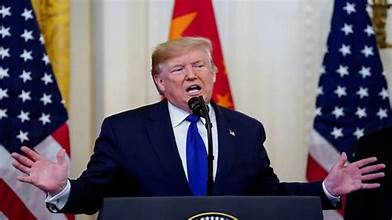
by Former US President Donald Trump has once again revived one of the most debated claims of his political career: that he deserves the Nobel Peace Prize for preventing multiple global conflicts. In recent remarks, Trump asserted that during his presidency he stopped as many as eight wars, arguing that his leadership style, diplomatic pressure, and willingness to defy conventional foreign policy norms helped avert catastrophic conflicts across several regions.
The statement has reignited political debate in the United States and abroad, drawing both sharp criticism and vocal support. While Trump’s allies hail his foreign policy record as unconventional yet effective, critics accuse him of exaggeration and selective interpretation of global events. Nevertheless, the claim underscores Trump’s ongoing effort to shape his legacy as a peacemaker rather than a warmonger—an image he believes has been overlooked by the international community.
A Repeated Claim with Political Weight
Trump’s reference to the Nobel Peace Prize is not new. During and after his presidency, he repeatedly argued that his diplomatic initiatives, especially in the Middle East and Asia, deserved recognition. According to Trump, his administration prevented wars that “would have wiped out entire regions” had previous leadership styles continued unchecked.
In his recent remarks, Trump stated that had he not been president, the world would have witnessed a series of large-scale wars involving nuclear-armed states and long-standing regional rivals. He expressed frustration that despite what he sees as tangible results, international institutions ignored his efforts, allegedly due to political bias against him.
The Nobel Peace Prize, awarded annually to individuals or organizations that significantly contribute to peace, has often been controversial. Trump frequently compares his record to past recipients, arguing that his achievements were more concrete and impactful than those of others who received the honor.
The Eight Wars Trump Claims He Prevented
While Trump does not always specify the eight wars in detail, his statements and past speeches provide clues. His supporters commonly point to several flashpoints during his tenure that did not escalate into full-scale conflicts.
US–North Korea Tensions
One Prize of the most prominent examples Trump highlights is North Korea. When he took office in 2017, tensions between Washington and Pyongyang were at historic highs, with missile tests and nuclear threats dominating headlines. Trump adopted a strategy that combined maximum pressure through sanctions with unprecedented direct diplomacy.
His historic meetings with North Korean leader Kim Jong-un, though criticized by some as legitimizing an authoritarian regime, reduced immediate tensions and halted long-range missile tests for a significant period. Trump maintains that without his intervention, the Korean Peninsula could have plunged into war.
India–Pakistan Crisis
Another frequently cited example Prize is the India–Pakistan standoff following the Pulwama attack in 2019. The crisis brought two nuclear-armed neighbors to the brink of war after airstrikes and retaliatory actions. Trump claims behind-the-scenes diplomacy by the US helped defuse tensions and prevent escalation.
While regional leaders played central roles, Trump has repeatedly asserted that American mediation was crucial in calming the situation and preventing a broader conflict.
Iran–US Confrontation
The US-Iran relationship deteriorated sharply during Trump’s presidency, particularly after Washington withdrew from the Iran nuclear deal. The killing of Iranian General Qassem Soleimani in early 2020 pushed tensions to a dangerous level, raising fears of an all-out war in the Middle East.
Trump argues that his firm stance ultimately deterred Iran from escalating further, claiming that decisive action prevented a prolonged regional conflict involving multiple countries.
Middle East Normalization
Trump also points to the Abraham Accords, which normalized relations between Israel and several Arab states, as a cornerstone of his peace legacy. Supporters argue that these agreements reduced the likelihood of future wars in the Middle East by reshaping regional alliances.
Though critics note that the accords did not resolve the Palestinian issue, Trump insists they prevented multiple potential conflicts by fostering cooperation and dialogue instead of hostility.

Supporters’ View: An Unconventional Peacemaker
Trump’s supporters argue that traditional measures of peace often overlook prevention. According to them, stopping wars before they begin is inherently less visible than ending existing conflicts, making such achievements easier to dismiss.
They credit Trump’s transactional approach, unpredictable rhetoric, and willingness to confront adversaries directly as deterrents. In their view, global rivals feared Trump’s readiness to act, which discouraged aggression.
Many conservatives also argue that Trump avoided launching new large-scale military interventions, a notable contrast with previous administrations. They emphasize that despite intense global tensions, the US did not become embroiled in new prolonged wars during his term.
For these supporters, Trump’s Nobel Peace Prize claim is not arrogance but a reflection of what they believe is an unfairly ignored record of peace through strength.https://tribune.com.pk
Critics’ Response: Exaggeration and Oversimplification
Critics strongly dispute Trump’s claims, arguing that he overstates his role in global events. They contend that many of the situations he cites were managed by complex international dynamics rather than unilateral US action.
Foreign policy experts note that while Trump engaged in high-profile diplomacy, some tensions remained unresolved or worsened. For example, North Korea retained its nuclear arsenal, US-Iran relations deteriorated further, and conflicts in Afghanistan and Syria continued throughout his presidency.
Critics also argue that brinkmanship, rather than preventing war, sometimes increased the risk of miscalculation. Trump’s harsh rhetoric and sudden policy shifts, they say, created uncertainty that could have escalated conflicts under different circumstances.
Regarding the Nobel Peace Prize, detractors argue that the award traditionally recognizes sustained peace-building efforts rather than claims of hypothetical wars avoided.
The Nobel Peace Prize Debate
Trump’s repeated references to the Nobel Peace Prize reflect broader debates about how peace is defined and rewarded. The prize has historically gone to figures involved in negotiations, humanitarian work, or institutional peace-building, rather than leaders who argue they prevented wars through deterrence.
Some supporters argue that this approach is outdated and fails to recognize modern geopolitical realities, where prevention often happens through strategic pressure rather than treaties. Critics counter that deterrence-based peace is fragile and does not address root causes of conflict.
The controversy also highlights how the Nobel Prize itself has become politicized, with winners often scrutinized through ideological lenses. Trump’s polarizing persona amplifies this scrutiny, making consensus around his claims particularly difficult.
Political Context and Future Implications
Trump’s renewed Nobel Peace Prize claim comes amid ongoing political activity and speculation about his future ambitions. By emphasizing his role as a peacemaker, Trump appears to be reshaping his foreign policy legacy for both domestic and international audiences.
The claim also resonates with voters who are weary of endless wars and skeptical of global institutions. For these audiences, Trump’s message reinforces his image as a leader who prioritized national interest and avoided costly foreign entanglements.
At the same time, the controversy keeps Trump at the center of global political discourse, ensuring that his presidency remains a point of reference in discussions about international security and diplomacy.

A Legacy Still Being Written
Whether Trump truly prevented eight wars remains a matter of interpretation. International relations are complex, and attributing peace or conflict to a single leader is inherently difficult. Yet Trump’s insistence on this narrative underscores his belief that his foreign policy approach fundamentally altered global dynamics.
Supporters see a leader who challenged the status quo and kept adversaries in check. Critics see a president who took credit for outcomes shaped by broader forces. Between these perspectives lies a nuanced reality that historians and analysts will continue to debate.
What is clear is that Trump’s Nobel Peace Prize claim is not merely about an award. It is about legacy, perception, and the ongoing struggle to define what effective leadership looks like in an increasingly unstable world.
As global tensions persist and new conflicts emerge, Trump’s assertion invites a broader conversation: should preventing wars, even invisibly, count as a historic achievement? And who gets to decide when peace has truly been preserved?